Showing posts with label Pulmonology. Show all posts

Tuesday, June 7, 2011

CPAP for sleep apnea - BMJ video


BMJ: Sleep apnoea (apnea, in its American spelling) is a condition that causes a patient to stop breathing for short periods during their sleep. In this video researchers Joaquín Durán-Cantolla and Jose María Montserrat discuss their work into the use of CPAP (continuous positive airway pressure) to treat the condition.

People with OSA may be twice as likely to develop a stroke.

Did you know that obstructive sleep apnea (OSA) can reduce a child’s IQ by as many as 10 points, while treatment in children with OSA can improve school grades?

Related:
Mavs Fan at the Finals - Photos - SI.com http://goo.gl/tIdL3

Wednesday, February 23, 2011

Acute bronchitis: Many patients expect to be treated with antibiotics and cough meds but this differs from guidelines


Mind map of differential diagnosis of cough. See more Allergy and Immunology mind maps here.

Cough is the most common symptom bringing patients to the primary care physician's office. The most common diagnosis in these patients is acute bronchitis, according to a recent review in the official journal of AFP, American Family Physician.

Acute bronchitis should be differentiated from other common causes of cough such as pneumonia and asthma - because the therapies are clearly different.

Symptoms of acute bronchitis typically last 3 weeks. As we already know, the presence of colored (e.g., yellow or green) sputum does not reliably differentiate between bacterial and viral lower respiratory tract infections.

Viruses cause more than 90% of acute bronchitis, and therefore, antibiotics are generally not indicated. They should be used only if pertussis is suspected to reduce transmission or if the patient is at increased risk of developing pneumonia (e.g., patients 65 years or older).

The typical therapies that have been traditionally used for managing acute bronchitis symptoms have been shown to be ineffective. The U.S. Food and Drug Administration recommends against using cough and cold preparations in children younger than 6 years.

The supplement pelargonium may help reduce symptom severity in adults.

Many patients expect to be treated with antibiotics and cough medications but this differs from evidence-based recommendations.

The CNN video below tries to decipher what hides behind the names of common cough and cold medications:


References:
Diagnosis and treatment of acute bronchitis. Albert RH. Am Fam Physician. 2010 Dec 1;82(11):1345-50.

Friday, January 21, 2011

STOP-BANG questionnaire identifies patients with OSA at hight risk for surgical complications

What is preoperative STOP-BANG?

This is a questionnaire that evaluates the following patient characteristics:

Snoring, Tiredness during daytime, Observed apnea, high blood Pressure, Body mass index, Age, Neck circumference, Gender

Patient population

135 adult patients undergoing elective surgery at a tertiary care center were administered the STOP-BANG questionnaire.

41.5% of patients had high risk scores for OSAS.

Patients at high risk of OSAS had a much higher rate of postoperative complications compared with patients at low risk (19.6% vs 1.3%).

STOP-BANG questionnaire predicts high risk

The STOP-BANG questionnaire is useful for preoperative identification of patients at higher than normal risk for surgical complications, probably because it identifies patients with occult OSAS.

References

Obstructive Sleep Apnea Syndrome and Postoperative Complications. Clinical Use of the STOP-BANG Questionnaire. Tajender S. Vasu, MD; Karl Doghramji, MD; Rodrigo Cavallazzi, MD; Ritu Grewal, MD; Amyn Hirani, MD; Benjamin Leiby, PhD; Dimitri Markov, MD; David Reiter, MD; Walter K. Kraft, MD; Thomas Witkowski, MD. Arch Otolaryngol Head Neck Surg. 2010;136(10):1020-1024. doi:10.1001/archoto.2010.1020

Image source: Wikipedia, public domain.

Wednesday, January 19, 2011

Participation in clean-up of oil spill associated with airway injury and chromosomal damage

In 2002, the oil tanker Prestige spilled more than 67 000 tons of bunker oil, heavily contaminating the coast of northwestern Spain. The study population included local fishermen who were highly exposed (n = 501) or not exposed (n = 177) to oil. They were evaluated 2 years after the spill.

Elevated markers of airway injury

Persons exposed to oil were at increased risk for lower respiratory tract symptoms (risk difference, 8.0). However, lung function did not significantly differ between the groups. Exposed participants also had higher levels of exhaled vascular endothelial growth factor (risk difference, 44.8) and basic fibroblast growth factor (risk difference, 16.0).

Human chromosomes (grey) capped by telomeres (white). Image source: Wikipedia, public domain.

Chromosomal damage

A higher proportion of exposed participants had structural chromosomal alterations (risk difference, 27.4), predominantly unbalanced alterations.

Participation in clean-up of a major oil spill was associated with persistent respiratory symptoms, elevated markers of airway injury in breath condensate, and chromosomal damage.

References:
Health Changes in Fishermen 2 Years After Clean-up of the Prestige Oil Spill. Ann Intern Med, October 19, 2010, vol. 153 no. 8 489-498.

After a lung transplant, an aria: a story of survival from end-stage pulmonary hypertension


TED talks: "You'll never sing again, said her doctor. But in a story from the very edge of medical possibility, operatic soprano Charity Tillemann-Dick tells a double story of survival -- of her body, from a double lung transplant -- and of her spirit, fueled by an unwavering will to sing. A powerful story from TEDMED 2011."

Tillemann-Dick was diagnosed in 2004 – at the age of 20 – with Idiopathic Pulmonary Hypertension, a disease that causes high blood pressure in the pulmonary artery, which connects the heart to the lungs. People with the disease typically have a two-to-five-year mortality rate after diagnosis.

Her physicians at Johns Hopkins put her on the lung transplant list at Cleveland Clinic. In September 2009, organs became available, and she had a double lung transplant. After a 13-hour surgery and 2 cardiac arrests in the OR, her recovery was extremely complicated but she is happy to be able to sing again.

If you have a minute, don't forget to check the comments on YouTube and the TED Talks site.

References:
Faith, Hope... and Charity. Cleveland Clinic.

Monday, December 13, 2010

COPD patients with anxiety have a higher risk of exacerbations

Psychological functioning is an important determinant of health outcomes in chronic lung disease.

COPD was associated with a greater risk of anxiety in multivariable analysis (OR 1.85). Among patients with COPD, anxiety was related to poorer health outcomes including worse submaximal exercise performance (less distance walked during the 6-min walk test) and a greater risk of self-reported functional limitations.

Subjects with COPD with anxiety had a higher risk of COPD exacerbations.

COPD is associated with a higher risk of anxiety. Once anxiety develops among patients with COPD, it is related to poorer health outcomes.

References:

Influence of anxiety on health outcomes in COPD. Eisner et al. Thorax 2010;65:229-234 doi:10.1136/thx.2009.126201

Comments:

Dr RW: I don't have the full text of this paper, and I wonder if they controlled for continued smoking. Nicotine is a powerful anxiolytic for some COPD patients.

Thursday, October 21, 2010

New CPR Guidelines - Hands Only - Use "CAB" Instead of "ABC" While Singing "Stayin' Alive"


The American Heart Association is adopting new cardiopulmonary Resuscitation (CPR) guidelines that do away with mouth to mouth resuscitation and focus on chest compressions. Do fast, forceful compressions; the beat of "Stayin' Alive" is the right pace - 100 beats per minute. Queen's "Another one bites the dust" was rejected as an alternative song choice.

Currently, this recommendation only applies to laymen CPR. The professional rescuers (EMTs, doctors, etc.) should use the previous approach with a compression-breathing (ventilation) ratio of 30:2.

However, “chest compression only” CPR is recommended if the rescuer is not trained (for example, in dispatcher assisted CPR) or is not willing to give rescue breaths. The aim is now to compress the chest to a depth of 5-6 cm (rather than 4-5 cm). This recommendation is based on several studies showing that deeper compressions were associated with improved short term outcomes.


Dr. Sanjay Gupta shows Matthew McConaughey the new way of doing CPR on Larry King Live.


Bee Gees - Stayin' Alive.

References:
New CPR is spelled C-A-B. CNN.
New international guidelines on resuscitation. BMJ, 2010.

Related:
Dangers of unrecognized heart disease: Husband dies while giving wife CPR (both found dead, age 60, 59) http://goo.gl/LZ39U

Thursday, October 7, 2010

What's new in pulmonary, critical care, and sleep medicine from UpToDate

35% of UpToDate topics are updated every four months. The editors select a small number of the most important updates and share them via "What's new" page. I selected the brief excerpts below from What's new in hematology:

Asthma

When evaluating patients for occupational asthma, sputum eosinophil counts at 7 and 24 hours after specific inhalation challenge have a greater sensitivity and positive predictive value than exhaled nitric oxide (eNO).

Critical care

Proton pump inhibitors (PPIs) may be slightly more effective than histamine-2 (H2) blockers at preventing gastrointestinal (GI) bleeding in critically ill patients. However, the difference is small if real.

Idiopathic pulmonary fibrosis

Sildenafil, tyrosine kinase inhibitor imatinib, and pirfenidone, an anti-fibrotic agent, were each no more effective than placebo for treatment of idiopathic pulmonary fibrosis.

Pleural effusion

Using ultrasonography to identify a site for diagnostic thoracentesis is associated with significantly lower risk of pneumothorax, than using the physical exam for site selection.

Pulmonary embolism

PE is frequently asymptomatic. Among 5233 patients with a DVT, 32 percent had asymptomatic PE.

References:
What's new in pulmonary, critical care, and sleep medicine. UpToDate.

Wednesday, October 6, 2010

First official antismoking campaign was launched in 1604 by James I of England

From the BMJ:

Monarchs and their heirs are not always noted for their rational medical advice. But James VI of Scotland, who became James I of England in 1603, was different.

Published anonymously in 1604 but immediately credited to the king, A Counterblaste to Tobacco flew in the face of prevailing medical opinion by outlining some of the chief health risks of smoking more than three centuries before scientists made the connection.

Possibly the first official antismoking campaign, the royal pamphlet highlighted cost and passive smoking as two of the most powerful arguments against tobacco, while it lamented that addiction, peer pressure, and fashion were among the most difficult obstacles to overcome.


A Counterblaste to Tobacco is written in Early Modern English and refers to medical theories of the time (e.g. the four humours). In it, King James I blames Native Americans for bringing tobacco in Europe, complains about passive smoking, warns of dangers to the lungs, and decries tobacco's odour as "hatefull to the nose."

James's dislike of tobacco led him to authorize an excise tax and tariff of six shillings and eight pence per pound of tobacco imported, or £1 per three pounds, a large sum of money for the time.

References:
Royal insights on smoking - Moore 340: c1408 - BMJ.
Image source: James I, VI by John de Critz, c.1606, Wikipedia, public domain.
A Counterblaste to Tobacco. Wikipedia.

Twitter comments:

@CardioNP: 400+ yrs later I still wade thru smoke to enter the hospital.

Tuesday, August 17, 2010

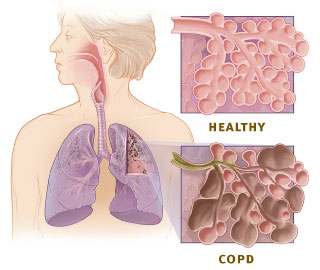
2 in 3 people with known risk factors for COPD don't know they have the disease

One in five heavy smokers over age 40 have findings of COPD, but only one-third have been previously diagnosed with the common lung disease.

10% of people worldwide over the age of 40 are affected by COPD.

Researchers screened 1,003 people aged 40 and over who were current or former heavy smokers. Heavy smoking was defined as a smoking history of 20 pack-years or more.

The results showed that 20.7% of the people screened met the criteria for a diagnosis of COPD but only 32.7% had previously been diagnosed with the disease or were aware of their COPD diagnosis.

References:
Many Unaware They Have COPD. WebMD.
Image source: Lungs, Wikipedia, public domain.

Tuesday, July 27, 2010

Video: Awake Endotracheal Intubation


Video: Awake Endotracheal Intubation for "Fun and Knowledge" by an anesthesiologist from the Massachusetts General Hospital (MGH). Not sure about the "fun" part...

References:
Awake Endotracheal Intubation for Fun and Knowledge. Medgadget, 2010.

Tuesday, May 11, 2010

17% of food-related asphyxiations were caused by hot dogs - "the perfect plug for a child's airway"

From Consumer Reports health blog:

Small toys and foods that are choking hazards should carry warning labels - and some hot dog brands already do.

About 17% of food-related asphyxiations were caused by hot dogs. In total, 41% were caused by food items including:

- hot dogs
- grapes
- carrots
- hard candy

Food manufacturers should design new foods and redesign existing foods to avoid shapes, sizes, textures and other characteristics that increase choking risk to children, to the extent possible.

"If you were to take the best engineers in the world and try to design the perfect plug for a child's airway, it would be a hot dog," says statement author Gary Smith. "I'm a pediatric emergency doctor, and to try to get them out once they're wedged in, it's almost impossible."

References:
Image source: Wikipedia, GNU Free Documentation License.

Related:
Kinder Surprise egg seized at U.S. border - banned by law as a choking hazard to young children http://goo.gl/UNUoG - Sold around the world.

Sunday, May 2, 2010

Tiotropium for COPD: A good foundation therapy for most patients

From a BMJ Editorial:

Tiotropium is a once daily, inhaled, long acting anticholinergic drug (LAMA) that provides 24 hour improvement in airflow and hyperinflation in patients with chronic obstructive pulmonary disease (COPD).

Clinical trials have consistently shown that these physiological effects translate into improvements in:

- lung function
- exercise tolerance
- health related quality of life
- fewer exacerbations

References:
Tiotropium and chronic obstructive pulmonary disease. BMJ, 2010.
http://www.bmj.com/cgi/content/short/340/feb19_1/c833
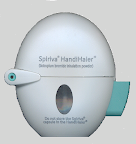
Image source: Wikipedia, public domain.

Saturday, April 24, 2010

Occupation may be a key factor in lung cancer

While cigarettes are by far the most important cause of lung cancer, chemicals and other on-the-job hazards "play a remarkable role" in lung cancer risk.

5% of lung cancers in men are job-related. Men in the known to be risky occupations were 74% more likely to have been diagnosed with lung cancer.

The strongest associations were seen for ceramic and pottery jobs and brick manufacturing, as well as for those working in manufacturing of non-iron metals.

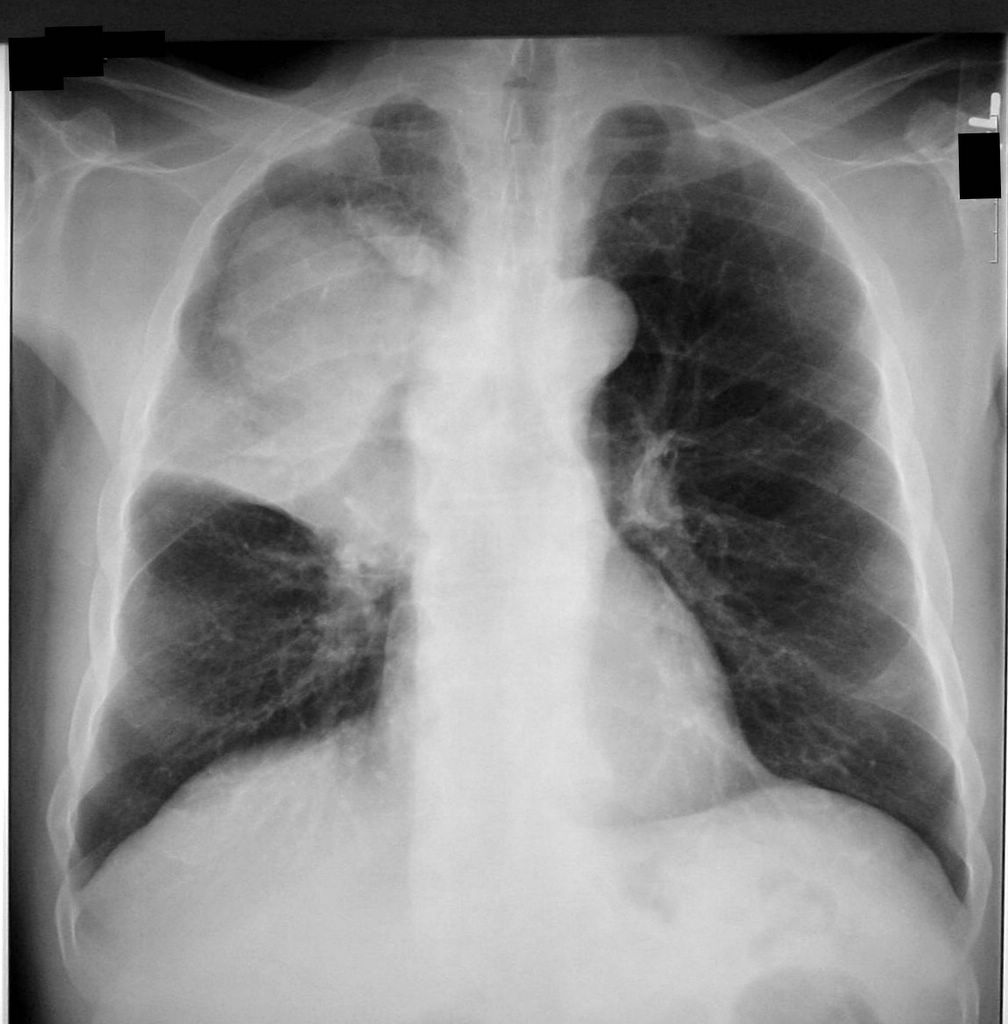
A CXR shows a right upper lobe (RUL) mass due to lung cancer. Source: Finger Clubbing due to Lung Cancer. Clinical Cases and Images.

References:
Occupation a key factor in men's lung cancer risk. Reuters, 2010.
http://www.reuters.com/article/idUSTRE61E53920100215

Saturday, April 17, 2010

Better Sleep, Better Learning? Obstructive sleep apnea can reduce a child’s IQ by 10 points

From Science Life Blog at the University of Chicago:

Pediatric obstructive sleep apnea, or OSA, can have long-term, detrimental effects on a child’s cardiovascular and respiratory health. But it can also create neurocognitive effects, such as a reduced ability to learn and retain information.

OSA can reduce a child’s IQ by as many as 10 points, while treatment in children with OSA can improve grades.

References:
Better Sleep, Better Learning? « Science Life Blog « University of Chicago.
http://sciencelife.uchospitals.edu/2010/02/15/better-sleep-better-learning
Sleep duration is shorter in obese children http://goo.gl/z5JFs

Thursday, April 15, 2010

Vitamin D deficiency occurs frequently in COPD and correlates with severity

Serum 25-hydroxyvitamin D (25-OHD) levels were measured in 414 (ex)-smokers older than 50 years and the link between vitamin D status and presence of COPD was assessed. The rs7041 and rs4588 variants in the vitamin D-binding gene (GC) were genotyped and their effects on 25-OHD levels were tested.

In patients with COPD, 25-OHD levels correlated significantly with forced expiratory volume in 1 s (FEV1).

Compared with 31% of the smokers with normal lung function, as many as 60% and 77% of patients with GOLD (Global Initiative for Obstructive Lung Disease) stage 3 and 4 exhibited deficient 25-OHD levels lower than 20 ng/ml.

25-OHD levels were reduced by 25% in homozygous carriers of the rs7041 at-risk allele.

76% and 100% of patients with GOLD stage 3 and 4 homozygous for the rs7041 allele exhibited 25-OHD levels lower than 20 ng/ml.

Vitamin D deficiency occurs frequently in COPD and correlates with severity of COPD. The data warrant vitamin D supplementation in patients with severe COPD, especially in those carrying at-risk rs7041 variants.

References:
Vitamin D deficiency is highly prevalent in COPD and correlates with variants in the vitamin D-binding gene. Thorax 2010;65:215-220 doi:10.1136/thx.2009.120659.
Image source: Lungs, Wikipedia, public domain.

Sunday, March 14, 2010

Emphysema and Airflow Obstruction Associated with Impaired Left Ventricular Filling

Very severe chronic obstructive pulmonary disease (COPD) causes cor pulmonale - elevated pulmonary vascular resistance and secondary reductions in left ventricular filling, stroke volume, and cardiac output.

The authors of this NEJM study hypothesized that emphysema, as detected on computed tomography (CT), and airflow obstruction are inversely related to left ventricular end-diastolic volume, stroke volume, and cardiac output among persons without very severe lung disease.

Of the study participants, 13% were current smokers, 38% were former smokers, and 49% had never smoked.

A 10% increase in emphysema on CT was related to decrease in left ventricular end-diastolic volume, stroke volume, and cardiac output.

Percent emphysema and airflow obstruction were not associated with the left ventricular ejection fraction (LVEF).


Mind map of Chronic Obstructive Pulmonary Disease (COPD) (click to enlarge the image).

References:
Percent Emphysema, Airflow Obstruction, and Impaired Left Ventricular Filling. R. Graham Barr et al. NEJM Volume 362:217-227 January 21, 2010 Number 3.

Wednesday, March 3, 2010

Cigarette smokers have lower IQs than non-smokers, and the more a person smokes, the lower their IQ

From Reuters:

Young men who smoked a pack of cigarettes a day or more had IQ scores 7.5 points lower than non-smokers in a study of over 20,000 Israeli military recruits.

"Adolescents with poorer IQ scores might be targeted for programs designed to prevent smoking," concluded the researchers in the journal Addiction.

The average IQ for non-smokers was 101, while it was 94 for men who had started smoking before entering the military. IQ steadily dropped as the number of cigarettes smoked increased, from 98 for people who smoked one to five cigarettes daily to 90 for those who smoked more than a pack a day. IQ scores from 84 to 116 are considered to indicate average intelligence.

The study may suggest that lower IQ individuals are more likely to choose to smoke, rather than that smoking makes people less intelligent.

References:
http://www.reuters.com/article/idUSTRE61M3UQ20100223

Comments from Google Buzz:

Dr Mike Cadogan - By definition non-smokers smarter than smokers...

Ben Ferguson - That's a weird conclusion to come to, in my opinion. They associated essentially pack-years with intelligence, which would seem to indicate a dosage effect, but then the suggestions were that they had lower IQs to begin with? It's a bit of a non sequitur. That there's a dosage effect would suggest that most of them had equal IQs before starting smoking; to conclude that they started smoking as a result of having lower intelligence to begin with has nothing to do with their aims and even undermines their findings.

Lakshman Swamy - Smoking is an addiction, and the smoking population is marginalized as it is. Obviously smoking is terrible for you... but let us not forget that smokers need healthcare and health advice more than most. I worry that this will further a "judging" attitude on the part of physicians.

Arin Basu - There is a problem in reducing entities like intelligence to single numbers like IQ scores (this is an offhand comment, I have not read /this/ particular article), but talking of programme targetting on the basis of studies that go to suggest "if you have low IQ then you smoke", in other words, implicitly accepting low IQ as /cause/ of smoking is dangerous. Well spotted though.

Image source: Wikipedia, Tomasz Sienicki, Creative Commons Attribution ShareAlike 2.0 License.

Thursday, February 25, 2010

Vehicle Exhaust = Second-hand Smoke?

From the NYTimes:

Exhaust from cars and trucks exacerbates asthma in children and may cause new respiratory illnesses and heart problems in adults, even resulting in deaths.

The meta-analysis included 700 peer-reviewed studies on varying aspects of motor vehicle emissions and health. It found “evidence of a causal relationship,” but not proof of one, between pollution from vehicles and impaired lung function and accelerated hardening of the arteries.

The study found that the biggest effects occurred among people who lived within 300 to 500 meters — about two-tenths to three-tenths of a mile — from highways and major roads. That applies to 30-40% of the population of North America.

“Like the issue of second-hand smoke, it’s very difficult to understand the exact mechanisms that make it bad — but it’s easy to understand that it is in fact bad.”

References:
Report Links Vehicle Exhaust to Health Problems. NYT, 2010.
Worldwide, 40% of children, 33% of male non-smokers, 35% of female non-smokers are exposed to second-hand smoke http://goo.gl/xFGef
Heavy traffic, Wikipedia, GNU Free Documentation License.

Friday, February 19, 2010

Superficial Venous Thrombosis Linked to Increased Risk of "Deep" Venous Thromboembolism for Months

Superficial venous thrombosis (SVT) is perceived to have a benign prognosis.

Among 844 patients with SVT, 24.9% also had deep venous thrombosis (DVT) or symptomatic pulmonary embolism.

Among 600 patients without DVT or pulmonary embolism at inclusion who were eligible for 3-month follow-up, 10.2% developed thromboembolic complications at 3 months despite 90.5% having received anticoagulants:

- pulmonary embolism 0.5%
- DVT 2.8%
- extension of SVT 3.3%
- recurrence of SVT 1.9%

A substantial number of patients with SVT exhibit venous thromboembolism at presentation, and some that do not can develop this complication in the subsequent 3 months.

References:
http://www.annals.org/content/152/4/218.short
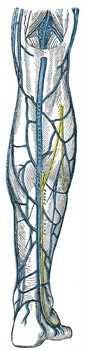
Image source: Saphenous vein, Gray's Anatomy, 1918 (public domain).