Showing posts with label COPD. Show all posts

Monday, December 13, 2010

COPD patients with anxiety have a higher risk of exacerbations

Psychological functioning is an important determinant of health outcomes in chronic lung disease.

COPD was associated with a greater risk of anxiety in multivariable analysis (OR 1.85). Among patients with COPD, anxiety was related to poorer health outcomes including worse submaximal exercise performance (less distance walked during the 6-min walk test) and a greater risk of self-reported functional limitations.

Subjects with COPD with anxiety had a higher risk of COPD exacerbations.

COPD is associated with a higher risk of anxiety. Once anxiety develops among patients with COPD, it is related to poorer health outcomes.

References:

Influence of anxiety on health outcomes in COPD. Eisner et al. Thorax 2010;65:229-234 doi:10.1136/thx.2009.126201

Comments:

Dr RW: I don't have the full text of this paper, and I wonder if they controlled for continued smoking. Nicotine is a powerful anxiolytic for some COPD patients.

Tuesday, August 17, 2010

2 in 3 people with known risk factors for COPD don't know they have the disease

One in five heavy smokers over age 40 have findings of COPD, but only one-third have been previously diagnosed with the common lung disease.

10% of people worldwide over the age of 40 are affected by COPD.

Researchers screened 1,003 people aged 40 and over who were current or former heavy smokers. Heavy smoking was defined as a smoking history of 20 pack-years or more.

The results showed that 20.7% of the people screened met the criteria for a diagnosis of COPD but only 32.7% had previously been diagnosed with the disease or were aware of their COPD diagnosis.

References:
Many Unaware They Have COPD. WebMD.
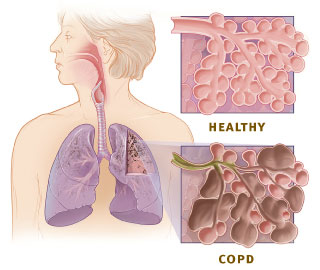
Image source: Lungs, Wikipedia, public domain.

Sunday, May 2, 2010

Tiotropium for COPD: A good foundation therapy for most patients

From a BMJ Editorial:

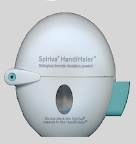
Tiotropium is a once daily, inhaled, long acting anticholinergic drug (LAMA) that provides 24 hour improvement in airflow and hyperinflation in patients with chronic obstructive pulmonary disease (COPD).

Clinical trials have consistently shown that these physiological effects translate into improvements in:

- lung function
- exercise tolerance
- health related quality of life
- fewer exacerbations

References:
Tiotropium and chronic obstructive pulmonary disease. BMJ, 2010.
http://www.bmj.com/cgi/content/short/340/feb19_1/c833
Image source: Wikipedia, public domain.

Thursday, April 15, 2010

Vitamin D deficiency occurs frequently in COPD and correlates with severity

Serum 25-hydroxyvitamin D (25-OHD) levels were measured in 414 (ex)-smokers older than 50 years and the link between vitamin D status and presence of COPD was assessed. The rs7041 and rs4588 variants in the vitamin D-binding gene (GC) were genotyped and their effects on 25-OHD levels were tested.

In patients with COPD, 25-OHD levels correlated significantly with forced expiratory volume in 1 s (FEV1).

Compared with 31% of the smokers with normal lung function, as many as 60% and 77% of patients with GOLD (Global Initiative for Obstructive Lung Disease) stage 3 and 4 exhibited deficient 25-OHD levels lower than 20 ng/ml.

25-OHD levels were reduced by 25% in homozygous carriers of the rs7041 at-risk allele.

76% and 100% of patients with GOLD stage 3 and 4 homozygous for the rs7041 allele exhibited 25-OHD levels lower than 20 ng/ml.

Vitamin D deficiency occurs frequently in COPD and correlates with severity of COPD. The data warrant vitamin D supplementation in patients with severe COPD, especially in those carrying at-risk rs7041 variants.

References:
Vitamin D deficiency is highly prevalent in COPD and correlates with variants in the vitamin D-binding gene. Thorax 2010;65:215-220 doi:10.1136/thx.2009.120659.
Image source: Lungs, Wikipedia, public domain.