Showing posts with label Hematology. Show all posts

Thursday, March 10, 2011

Investigating easy bruising in a child

From BMJ:

In a child, unusual bruising or bleeding out of proportion to the injury sustained should be investigated.

All children under investigation for easy bruising or a bleeding tendency should have:

- full blood count
- blood film (peripheral smear)
- coagulation screen including a thrombin time, in addition to a Von Willebrand factor assay and assays of factors VIII and IX

This is to ensure that mild forms of haemophilia are excluded even if the activated partial thromboplastin time is normal

In 30% of cases of haemophilia, there is no family history: it arises secondary to new genetic mutations
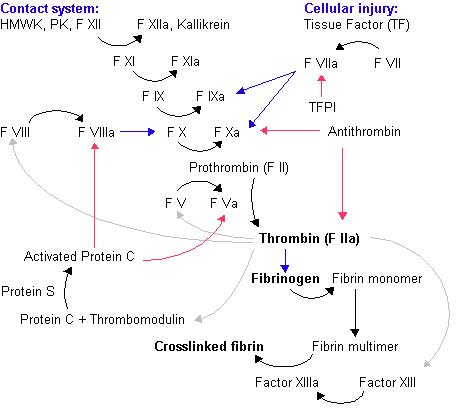

The coagulation cascade. Black arrow - conversion/activation of factor. Red arrows - action of inhibitors. Blue arrows - reactions catalysed by activated factor. Grey arrow - various functions of thrombin. Image source: Wikipedia

References:
Investigating easy bruising in a child. Anderson and Thomas 341, BMJ.

Friday, February 4, 2011

Romiplostim for Treatment on Immune Thrombocytopenia (ITP)

Romiplostim, a thrombopoietin mimetic, increases platelet counts in patients with immune thrombocytopenia, with few adverse effects.

In this open-label, 52-week study (funded by Amgen), 234 adult patients with immune thrombocytopenia, who had not undergone splenectomy, were randomized to receive the standard of care or weekly subcutaneous injections of romiplostim.

The rate of a platelet response in the romiplostim group was 2.3 times that in the standard-of-care group.

Patients receiving romiplostim had a significantly lower incidence of treatment failure [11%] than those receiving the standard of care [30%].

Splenectomy also was performed less frequently in patients receiving romiplostim [9%]) than in those receiving the standard of care [36%].

The romiplostim group had a lower rate of bleeding events, fewer blood transfusions, and greater improvements in the quality of life.

Romiplostim is a fusion protein analog of thrombopoietin. It is marketed under the trade name Nplate through a restricted usage program. Romiplostim was designated an orphan drug by the FDA in 2003, as the chronic ITP population in the USA is under 200,000.

In 2008, the FDA approved romiplostim as a long-term treatment for chronic ITP in adults who have not responded to other treatments, such as:

- corticosteroids
- intravenous immunoglobulin (IVIG)
- Rho(D) immune globulin
Immune thrombocytopenia: No longer ‘idiopathic’ http://goo.gl/z2Ks0
Image source: Nplate.com

Wednesday, September 29, 2010

What's new in hematology from UpToDate

35% of UpToDate topics are updated every four months. The editors select a small number of the most important updates and share them via "What's new" page. I selected the brief excerpts below from What's new in hematology:

Transplantation in aplastic anemia

In patients with severe aplastic anemia over the age of 40 who received allogeneic hematopoietic cell transplantation from an HLA-identical sibling, overall survival was 65 percent.

Improved survival when rituximab is added to fludarabine plus cyclophosphamide in CLL

There were higher response rates and survival with six courses of FCR (fludarabine, cyclophosphamide, and rituximab) when compared with six courses of FC (fludarabine, cyclophosphamide).

Second generation tyrosine kinase inhibitors (TKIs) for CML

Trials comparing dasatinib or nilotinib to imatinib for chronic myeloid leukemia (CML) demonstrated faster and deeper responses with these second generation tyrosine kinase inhibitors.

Improved understanding of pathobiology of multiple myeloma

Virtually all multiple myeloma (MM) cases are preceded by a premalignant plasma cell proliferative disorder known as monoclonal gammopathy of undetermined significance (MGUS). The pathobiology of myeloma as a two-step process - first there is the establishment of a limited stage of clonal proliferation (MGUS); then there is progression of MGUS to MM.

Denileukin diftitox superior to placebo for relapsed mycosis fungoides

There were better response rates with the recombinant interleukin-2-diphtheria toxin fusion protein denileukin diftitox used for therapy of mycosis fungoides and Sezary syndrome.

Survival in sickle cell disease

The estimated survival at 18 years is now 94 percent for those with HbSS or HbS/beta(0) thalassemia and 98 percent for those with HbSC or HbS/beta(+) thalassemia.

References:
What's new in hematology. UpToDate.

Thursday, August 26, 2010

Gene test decreases warfarin-related hospitalizations by 28%

Patients who received a test of two genes connected to warfarin sensitivity were 28 percent less likely to be hospitalized for a bleeding episode or blood clot than those whose safe and effective warfarin dosing was determined by traditional trial and error method.

The genetic tests, which are easily done with a cheek swab or blood sample, need only be performed once ever for each patient and cost somewhere between $200 and $400 - far less than even a brief hospital stay.


Warfarin Sensitivity Genotype Test - Mayo Clinic Video.

References:
Gene test can cut warfarin hospitalizations | Reuters.

Monday, June 7, 2010

Oral factor Xa inhibitor apixaban - more effective than enoxaparin for thromboprophylaxis after knee replacement

Low-molecular-weight heparins such as enoxaparin are preferred for prevention of venous thromboembolism after major joint replacement. Apixaban, an orally active factor Xa inhibitor, might be as effective, have lower bleeding risk, and be easier to use than is enoxaparin.

The primary outcome in this Lancet study was the composite of asymptomatic and symptomatic deep vein thrombosis (DVT), non-fatal pulmonary embolism (PE), and all-cause death during treatment. The primary outcome was reported in 15% of apixaban patients and 24% of enoxaparin patients (relative risk 0·62), absolute risk reduction 9·3%.

Major or clinically relevant non-major bleeding occurred in 4% of patients receiving apixaban and 5% of treated with enoxaparin.

The authors concluded that apixaban 2·5 mg twice daily, starting on the morning after total knee replacement, offers a convenient and more effective orally administered alternative to 40 mg per day enoxaparin, without increased bleeding.

References:
Image source: Apixaban, Wikipedia, public domain.

Friday, February 19, 2010

Superficial Venous Thrombosis Linked to Increased Risk of "Deep" Venous Thromboembolism for Months

Superficial venous thrombosis (SVT) is perceived to have a benign prognosis.

Among 844 patients with SVT, 24.9% also had deep venous thrombosis (DVT) or symptomatic pulmonary embolism.

Among 600 patients without DVT or pulmonary embolism at inclusion who were eligible for 3-month follow-up, 10.2% developed thromboembolic complications at 3 months despite 90.5% having received anticoagulants:

- pulmonary embolism 0.5%
- DVT 2.8%
- extension of SVT 3.3%
- recurrence of SVT 1.9%

A substantial number of patients with SVT exhibit venous thromboembolism at presentation, and some that do not can develop this complication in the subsequent 3 months.

References:
http://www.annals.org/content/152/4/218.short
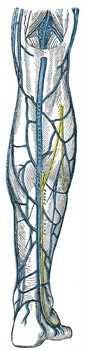
Image source: Saphenous vein, Gray's Anatomy, 1918 (public domain).

Tuesday, January 19, 2010

Essential Thrombocythemia - Mayo Clinic Video


Hematologist Ruben Mesa, M.D., of Mayo Clinic in Arizona, provides a comprehensive overview of Essential Thrombocythemia, also known as ET.

Dr. Mesa describes the fundamentals of this myeloproliferative disease, covering symptoms and how it is diagnosed to current and potential future treatment options.

Tuesday, January 12, 2010

Hematology and Oncology

Editor: V. Dimov, M.D., Assistant Professor at the University of Chicago

Hematology and Oncology Cases at ClinicalCases.org

Hematology and Oncology News at CasesBlog

Hematology and Oncology: Images in Clinical Medicine

Patient Information

Follow us and connect:


Published: 01/12/2010
Updated: 06/28/2010

Sunday, November 8, 2009

BMJ video: The woman who knew too much


BMJ video: Alice Stewart: The woman who knew too much.

"Alice Stewart was one of Britain's foremost epidemiologists. However her recognition came late in her career, having spent her life fighting the establishment's enshrined views.

In the 1950s when she started her work, x-rays were routinely used in foetal monitoring. It was Stewart who first showed the link between the practice and childhood leukemia. She went on to look at the effects of low-level radiation exposure - uncovering the true adverse effects of chronic exposure, and thus earning herself the enmity of the nuclear industry."

Sunday, August 2, 2009

TED Talks: Daniel Kraft invents a better way to harvest bone marrow


Daniel Kraft invents a better way to harvest bone marrow

"Daniel Kraft demos his Marrow Miner -- a new device that quickly harvests life-saving bone marrow with minimal pain to the donor. He emphasizes that the adult stem cells found in bone marrow can be used to treat many terminal conditions, from Parkinson's to heart disease."