Showing posts with label Education. Show all posts

Wednesday, June 8, 2011

The First Journal Club on Twitter - Then and Now

The first journal club on Twitter in 2008

I think we started the first medical journal club on Twitter at the Allergy and Immunology program of Creighton University back in 2008. Please let me know if you are aware of an earlier journal club focused on medical articles and broadcasted or held exclusively on Twitter prior to that date. We published an abstract at the annual meeting of the The American College of Allergy, Asthma and Immunology (ACAAI) in 2009, with collaborators from Creighton University, Louisiana State University (LSU) in Shreveport and Cleveland Clinic. The abstract and the poster are embedded below:

The Utility of a Real-time Microblogging Service for Journal Club in Allergy and Immunology. Dimov, V.; Randhawa, S.; Auron, M.; Casale, T. American College of Allergy, Asthma & Immunology (ACAAI) 2009 Annual Meeting. Ann Allergy Asthma Immunol., Vol 103:5, Suppl. 3, A126, Nov 2009.

Purpose

Internet-based services are an important source for communication and reference information for fellows in training in allergy and immunology. Our aim was to explore the utility of the free microbloging service Twitter.com to make the journal club educational activity more interactive.

Methods

We used the text message and Internet interfaces of the free microblogging service Twitter (http://twitter.com/) owned by Twitter, Inc. to post updates and summaries from the journal club activities at an Allergy and Immunology fellowship training program at an academic center. The updates were posted on a web site provided free of charge at http://twitter.com/AllergyNotes and simultaneously distributed to the cell phones of subscribers via text messages. The web site was freely available and comment were open to visitors. One fellow in training was assigned to update the microblogging service from his cell phone with the label "#JCAllergy" for easy referral and later retrieval from the Internet search interface.

Results

Five articles were discussed during a 2-hour journal club teaching session and 24 updates with links were posted on Twitter.com. The updates were followed in real time by 2 fellows at an Allergy and Immunology training program in a different state (not physically present at the meeting). Five fellows (out of 7, 71.4%) at two training programs expressed a favorable opinion of the use of the microblogging service to post updates from journal club.

Conclusion

The microblogging service Twitter can be used to share information from journal club in allergy and immunology and thus serves as an easy to implement form of distant learning for trainees and community allergists. The service is free to use and requires minimal equipment limited to an Internet-connected computer or a basic cell phone (not a smartphone) with activated text messaging service. A potential limitation of this approach may be the distractions that the reporting journal club participant may experience while simultaneously sending text messages and listening to the presentations. Twitter allows an immediate feedback from the journal club participants, following the updates from remote locations, which can enhance the educational aspects of this activity.


The concept of a journal club on Twitter has its own limitations inherent to the publishing medium and the enthusiasm of the participants. After a few months, we decided that the concept was interesting but ultimately the discussion of a journal article requires more than 140 characters.


The worldwide journal club on Twitter in 2011

In June 2011, a medical student and a junior doctor in the UK launched the idea of a journal club exclusively on Twitter. The social network and publishing medium of Twitter has grown tremendously from approximately 40 million accounts in 2008 to 150 million in 2011. The networks mass effect and the infectious enthusiasms of the two founders ensured a large participation in this new journal club on Twitter: http://twitjc.wordpress.com

I wish them best of success in this new educational endeavor. I think it is a great effort and it should be strongly encouraged.

My general comment on the 2008 concept, and this new 2011 version of journal club on Twitter, was that “we need to go beyond this 1950s model rather than adapt it to social media”. To be exact, Sir William Osler established the first formalized journal club at McGill University in Montreal in 1875 (http://j.mp/aGEvB0), but the concept itself seemed to get traction after the 1950s.

I think it would be a good idea to ask the participants themselves what they would like to see in a journal club on Twitter, i.e. "crowdsource" the community. This can be done via a Google Forms poll with a free text option for additional suggestions.

Dr. Stuart Flanagan tweeted that this could be an opportunity to develop or even reinvent the Journal Club model, and it could be a very exciting project. I agree, and will try to add a few specific ideas in a future blog post.

If we stay just on Twitter, this may look like another topical Twitter chat. For example, what are the major differences between "Journal Club on Twitter" and a Twitter chat on a topic?

In addition, Twitter may not be the best way for article discussion. It is just the popular tool at this time. Google Buzz is an alternative service that works well for this purpose but the major problem is that very few people use it. Buzz is a better medium than Twitter for a journal club from a technical point of view. It is easier to follow the conversation threads - this is one its main advantages and Facebook has it too. The search function of Buzz works well while Twitter Search traditionally “forgets” tweets older than 7 days.

Please have a look at the transcript of the first edition of #twitjc and you will realize how challenging is to follow a conversation on Twitter: http://www.scribd.com/doc/57191306/TwitJC-Transcript-5-6-2011

Reading a 30-page Twitter chat transcript with all @ handles, hashtags and timestamps included is not for everyone. Some editing of the transcript would make it more readable. We tried this with the original journal club in 2008, on a much smaller scale of course: http://allergynotes.blogspot.com/2008/12/allergy-and-immunology-journal-club-on.html

How about Journal Club on Facebook? I don't think that JC on either Facebook or Twitter (or blog comments) take the concept to a fundamentally new level.

In any case, Cleveland Clinic, ever the innovator, actually has a Journal Club on Facebook. Dr. Neil Mehta wrote a great summary on their model, using Google Reader and Facebook, check it out here: http://goo.gl/rnw2P
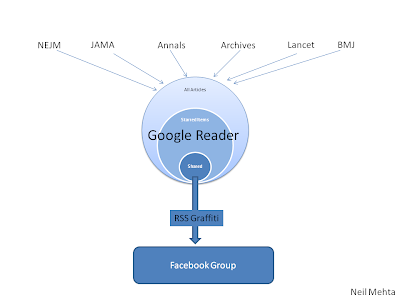

In conclusion, from personal experience, I would say that you can only learn when people criticize your project - it is the most helpful kind of feedback that you typically get for free.

Please consider visiting the website and Twitter account of this new Twitter Journal Club (http://twitjc.wordpress.com), follow the hashtag #TwitJC and enjoy the new editions.

Comments from Twitter:

@DrVes: Did you find #TwitJC useful? @EugenieReich is looking for scientists to be interviewed in Nature. I think the second event was very engaging and useful. That said, #TwitJC is more a Twitter chat on a topic/article rather than a Journal Club as we think of it in the U.S. This brings me to the third tweet on the topic: Do we need separate #meded tags for different parts of the world? http://bit.ly/maPEwm

@amcunningham: well, it's a journal club the way we think of it in the UK... A noisy, hectic one!- but gets the job done :) #TwitJC

@DrVes: Right. Different from what we typically do here, e.g. discuss every detail of a recent (very recent) article, focused on one topic.


Wednesday, June 1, 2011

Promoting women in science and medicine to become a priority

The University of Tromsø in Norway - the world's northernmost university - has adopted new recommendations designed to increase the number of female full professors from the current 23% to 30% by 2014.

Women spend longer as Associate Professors than men, partly because “men apply as soon as they think they have a chance of promotion, while women tend to wait until they are very confident”.

The panel developed 13 recommendations, among them:

- re-advertising positions if there are no women in the applicant pool
- ensuring that women receive training in salary negotiation
- assessing research quality rather than quantity
- improving the visibility of women within institutions
- encouraging diversity in leadership style

References:
Promoting women in science and medicine. The Lancet, Volume 376, Issue 9754, Page 1712, 20 November 2010.
Image source: OpenClipArt.org, public domain.

Monday, May 16, 2011

How to Use Social Media for Medical Education

Here are a few suggested approaches for social media use in medical education:

- Peer student groups can utilize a private blog to share clinical experiences

- Course/program directors and staff can use a wiki to manage course/program materials and centralize frequently used documents

- Longitudinal preceptors can use a microblog (e.g., Twitter) to share links to journal articles, medical news, and reminders

- Admissions personnel can use social networks during the application, interview, and acceptance processes to build a community before students ever set foot on campus

- A public affairs office could generate podcasts to share graduate news, campus information, celebrations, and research success stories

Networked Teacher Diagram - Update
The Networked Teacher - Diagram, Flickr http://goo.gl/CVddi

References:
Saarinen C, Arora V, Fergusen B, Chretien K. Incorporating social media into medical education. Academic Internal Medicine Insight. 9(1):12-13, 19. Read the full-text PDF here.

Monday, April 18, 2011

Effect of 16-Hour Duty Periods on Patient Care and Resident Education


Dr. Amy Oxentenko details a study appearing in the March 2011 issue of Mayo Clinic Proceedings (available at: http://www.mayoclinicproceedings.com) that looked at the effects of 16-hour duty periods for residents, and the impact of reduced shift length on:

- patient care metrics
- education
- transitions of care
- work hours
- resident satisfaction

Tuesday, March 8, 2011

There are 25,400 scientific journals and their number is increasing by 3.5% a year

More scientific and medical papers are being published now than ever before. Is it possible to be an expert nowadays, asks BMJ.

Every doctor has an ethical duty to keep up to date. Is this just getting more difficult or has it already become impossible? Since Alvin Toffler coined the phrase “information overload” in 1970, the growth of scientific and medical information has been inexorable.

There are now 25 400 journals in science, technology, and medicine, and their number is increasing by 3.5% a year; in 2009, they published 1.5 million articles. PubMed now cites more than 20 million papers.

One response of the medical profession to the increasing scientific basis and clinical capacity of medicine has been to increase subspecialisation. This may restrict the breadth of knowledge of the ultraspecialist, but can such subspecialists still maintain their depth of expertise?

I described my approach in 5 Tips to Stay Up-to-Date with Medical Literature:

1. RSS Feeds for Medical Journals.
2. Podcasts.
3. Persistent Searches on PubMed, Google News and Google.
4. Text-to-speech (TTS) for journal articles.
5. Blogs and Twitter accounts.

If you have a blog or Twitter account, you can try to deal with the information overload from blogs, RSS and Twitter more efficiently by using this:


The circle of online information (click to enlarge).

References:
On the impossibility of being expert. BMJ 2010; 341:c6815 doi: 10.1136/bmj.c6815.

Thursday, March 3, 2011

Blogs read by 20% of UK medical students, but only 8% write their own

A wide range of social media tools has become readily available in recent years, to the extent that the use of Facebook in particular is perceived as "second nature" by many students. There is increasing interest in the possibilities of using this social media services for medical education - blogs, wikis, Twitter and Facebook.

This UK study included a self-administered questionnaire survey of 212 first year medical students.

Over 90% used instant messaging. Social networking sites were also highly used - by 70%. There was no significant difference between males and females.

Blogs were read by 20% of students and a small number (8%) wrote their own blogs.

20% of males were users of media sharing and contributed to wikis.

Social bookmarking was rarely used by either gender.

Medical educators need to recognise the potential of social software in medical education but it is essential that students maintain the informality and privacy of these sites. The challenge is how to integrate social software into current curricula and institutional Virtual Learning Environments.

References:
Web 2.0 and social software: the medical student way of e-learning. Sandars J, Homer M, Pell G, Crocker T. Med Teach. 2010 Jun 18.

Comments from Twitter:

@DrVes I didn't expect that 8% of med students in the study wrote blogs - this is not my experience from teaching students and residents at Cleveland Clinic, Case Western and Creighton University.

@sandnsurf Medical education blog vs tumblr/posterous blog possibly. My students are at 10% for blog writing but 1% are actually medical.

@DrVes This is way higher than the stats here in the U.S. "Everybody's on Facebook, nobody has a blog"... :)

@doctorwhitecoat Not to jump mid convo, but at my school, I can say that most don't have blogs... at most maybe 3-5% and those that do... don't update.

@DrVes 2-5% is high. There was only one blogging student at Cleveland Clinic medical school who stopped after 1-2 years.

Related reading:
Assistant professor uses Twitter to teach students dental anatomy at Ohio State University - 113 of 200 students signed up, 56% http://goo.gl/jvyq7
Image source: Blogger.com.

Wednesday, March 2, 2011

Current school system is failing boys - how to re-engage them in learning - TED video


At TEDxPSU, Ali Carr-Chellman pinpoints 3 reasons boys are tuning out of school in droves, and lays out her bold plan to re-engage them: bringing their culture into the classroom, with new rules that let boys be boys. The first part of the talk points to some eye-opening facts about how the current school system is failing boys.

Monday, February 28, 2011

25% of medical students use Facebook for education - with mixed success

This Australian study aimed to evaluate how effectively medical students may be using Facebook for education.

Researchers surveyed 759 medical students at one Melbourne university, and explored the design and conduct of 4 Facebook study groups.

25.5% of students reported using Facebook for education-related reasons and another 50.0% said they were open to doing so.

The case studies showed conservative approaches in students' efforts to support their development of medical knowledge and mixed successes.

The study authors concluded that Facebook as part of learning and teaching is as much of a challenge for many students as it may be for most educators.

References:
Medical students' use of Facebook to support learning: Insights from four case studies. Gray K, Annabell L, Kennedy G. Med Teach. 2010;32(12):971-6.
Assistant professor uses Twitter to teach students dental anatomy at Ohio State University - 113 of 200 students signed up, 56% http://goo.gl/jvyq7

Monday, February 21, 2011

iPad use by medical residents gets rave reviews, increases productivity

View more videos at: http://www.nbcchicago.com.

The Internal Medicine Residents at the University of Chicago Medical Center are now equipped with iPads as their primary device for clinical use.

In the summer of 2010, the Internal Medicine Residency (IMR) program began piloting a project to study the use of iPads on the inpatient wards. Initiated by the Chairman's Office, the project was intended to enhance efficiency of patient care activities on the wards with the goals of improved patient care and more robust conference attendance.

The pilot was overwhelmingly positive and has led to broader use of the devices for all IMR residents. The DOM Internal Medicine Residency program is the first training program in the country to utilize the device.

As an Assistant Professor at University of Chicago, I work with the residents on a daily basis and I can confirm that they love their iPads.

References:
University of Chicago Medical Center
iPads Helping Doctors. NBC.

Monday, February 7, 2011

Social Media in Medical Education: What are the Burning Questions?

The 2011 Association for the Study of Medical Education (ASME) conference will take place in Edinburgh in July.

The conference organizers are asking all the right questions:

- Is a WordPress blog more useful than a Blackboard module?

- How social is social bookmarking?

- How can social media help medical education researchers?

- How can we manage and develop our own digital identity?

Networked Teacher Diagram - Update
The Networked Teacher - Diagram, Flickr http://goo.gl/CVddi

References:
Social Media and Networks in Medical Education: Workshop at ASME

Thursday, January 6, 2011

Nursing student successfully challenges dissmissal from school because of Facebook photo


A Kansas college is facing a legal challenge over its dismissal of a nursing student who posted online a photograph of a human placenta studied in class - the WSJ video is embedded above.

The lawsuit includes a letter that Ms. Byrnes wrote to the college apologizing for what she called a "lapse in judgment" but asking that she not be dismissed.

The school said the four students are allowed to reapply to continue their nursing studies in August 2011.

Most reader comments on the story follow this pattern: "I fail to see why this posting should result in dismissal from school. The student broke no confidentiality, and the posting was certainly not obscene."

Monday, December 27, 2010

Positive attitude and cheerfulness not related to college success

This study investigated the relation between positive affect and college success for undergraduate students matriculating at 21 colleges and universities in the United States.

Positive affect — cheerfulness — was positively related to students’ self-rated academic abilities, self-predicted likelihoods of various college outcomes, self-stated major and academic-degree intentions, and self-reported subjective college outcomes, but negatively related to most objective college-success variables (e.g., cumulative college grade-point average) recorded by the institution of matriculation, and not related to objective college outcomes reported by the student.

Positive affect was thus associated with “positive illusions” about college-success variables.

References:
Positive Affect and College Success. Journal of Happiness Studies - SpringerLink Journal, 2010.
Image source: OpenClipArt.org (public domain).

Thursday, November 11, 2010

Are doctors required to get patient permission to use non-identifiable X-rays, CTs, EKGs for medical education online?

Sam Ko, MD, MBA asked this pertinent question on Twitter. My answer is below. Feel free to correct me and please provide references for your opinion.

Question: "Are Drs required to get Pt permission to use non-identifiable images for medical education?"

Answer: According to most journals, no.

The NEJM policy is here:

"If a photograph of an identifiable patient is used, the patient should complete and sign our Release Form for Photographs of Identifiable Patients. Any information that might identify the patient or hospital, including the date, should be removed from the image."

This is the BMJ policy:

Images – such as x rays, laparoscopic images, ultrasound images, pathology slides, or images of undistinctive parts of the body – may be used without consent so long as they are anonymised by the removal of any identifying marks and are not accompanied by text that could reveal the patient’s identity through clinical or personal detail.

Case Reports and HIPAA

Physicians must assure that the case report does not contain any of the 18 health information identifiers noted in the HIPAA regulations, unless authorization from the individual (s) has been obtained. The authorization is not required if neither of the 18 identifiers below are used in the case report.

List of 18 Identifiers:

1. Names;

2. All geographical subdivisions smaller than a State, including street address, city, county, precinct, zip code, and their equivalent geocodes, except for the initial three digits of a zip code, if according to the current publicly available data from the Bureau of the Census: (1) The geographic unit formed by combining all zip codes with the same three initial digits contains more than 20,000 people; and (2) The initial three digits of a zip code for all such geographic units containing 20,000 or fewer people is changed to 000.

3. All elements of dates (except year) for dates directly related to an individual, including birth date, admission date, discharge date, date of death; and all ages over 89 and all elements of dates (including year) indicative of such age, except that such ages and elements may be aggregated into a single category of age 90 or older;

4. Phone numbers;

5. Fax numbers;

6. Electronic mail addresses;

7. Social Security numbers;

8. Medical record numbers;

9. Health plan beneficiary numbers;

10. Account numbers;

11. Certificate/license numbers;

12. Vehicle identifiers and serial numbers, including license plate numbers;

13. Device identifiers and serial numbers;

14. Web Universal Resource Locators (URLs);

15. Internet Protocol (IP) address numbers;

16. Biometric identifiers, including finger and voice prints;

17. Full face photographic images and any comparable images; and

18. Any other unique identifying number, characteristic, or code (note this does not mean the unique code assigned by the investigator to code the data)

References:
Author Center - NEJM Images in Clinical Medicine.
Image source: Bone fracture, from Wikipedia, the free encyclopedia (public domain).

Tuesday, October 26, 2010

Free Medical Education Resources by the Association of American Medical Colleges (AAMC)

Head, Neck and Oral Cancer Examination

This 40-minute video is intended for practitioners of dentistry, medicine, nursing and public health who are responsible for diagnosing and referring patients with head and neck and oral cancer.

Emergency Medicine Ultrasound Simulation (U/SS) Case Scenario Package

This resource consisit of a modular package containing 5 high-fidelity full-body simulation case scenarios with supplemental bedside Emergency Department Ultrasound videos (de-identified) to assist in EM decision-making training.

Disclosing Medical Errors To Patients

This is a standardized patient case, which has been used to assess the communication skills of radiology residents when disclosing a medical error to a patient. The case content can be modified for use in other specialties. The checklist for the standardized patient and the self-evaluation checklist for the resident can be used without modification by all residencies.

Introduction to Effective Communication Skills

This PowerPoint with audio program covers the relevance and basic concepts of communication and interpersonal skills as they apply to general dentistry.

The Study Skills Workshop

The Study Skills Workshop was introduced to guide and promote 1st year Medical Students towards effective ways of learning in medicine. It is hoped that through the workshop the students are able to identify their individual learning styles and approaches. Thus they can find out self-improvement strategies to enhance their learning in medicine.

Image source: OpenClipArt.org, public domain.

Tuesday, September 7, 2010

How to identify medical students at risk of subsequent misconduct?

This small BMJ study suggests the following risk factors for subsequent professional misconduct:

- male sex
- lower socioeconomic background
- early academic difficulties at medical school

59 doctors who had graduated from 8 medical schools in the United Kingdom in 1958-97 and had a proved finding of serious professional misconduct in 1999-2004 (cases) and 236 controls (four for each case) were included in the study.

The findings are preliminary and should be interpreted with caution. Most doctors with risk factors will not come before disciplinary panels.

References:
Image source: OpenClipArt.org (public domain).

Wednesday, September 1, 2010

U.S. May Face Shortage of 150,000 Doctors in 15 Years

As ranks of insured patients expand, the U.S. may face shortage of 150,000 doctors in 15 years, according to the WSJ. That shortfall is predicted despite a push by teaching hospitals and medical schools to boost the number of U.S. doctors, which now totals about 954,000.

The greatest demand will be for primary-care physicians. These general practitioners, internists, family physicians and pediatricians will have a larger role under the new law, coordinating care for each patient.

Comments from Twitter:

@doctorwes Foreign docs are lining up.

@jmphillips Once I get into medical school, I should be OK!

@ddrullinsky ok Dr. Dimov, I'm on my way to help! thanks for posting my tweet! I hope to be there next year! Great blog BTW!

@a_singledrop but # of US residency spots remains flat. Why's this ok?

@drsteventucker I'm still not moving back!

References:
U.S. Faces Shortage of Doctors - WSJ.com.
Image source: sxc.hu

Friday, August 27, 2010

When was the earliest journal club?

The earliest references to journal clubs are in the memoirs and letters of Sir James Paget, a British surgeon, who described a group at St. Bartholomew’s Hospital in London in the mid-1800s as “a kind of club … a small room over a baker’s shop near the Hospital-gate where we could sit and read the journals.”

Sir William Osler established the first formal medical journal club at McGill University in Montreal in 1875. The original purpose of Osler’s journal club was “for the purchase and distribution of periodicals to which he could ill afford to subscribe” (see the excerpts from Google Books below).

References:
Journal clubs as a trigger for ’socializing’. The Search Principle blog.


Comments from Google Buzz:

Laika Spoetnik - Besides the point, but I have good memories of St Bartolomews. Here I learned direct sequencing and did part of my experiments. Very old building btw.

Aidan Finley - the father of Stephen Paget of "seed and soil" hypothesis.

Wednesday, August 25, 2010

Women in US academic medicine earn $13,000 less than male peers

A survey of 3,000 faculty members at the top 50 US medical schools has shown that women members earned $13,000 less than their male counterparts with the equivalent career position and professional activity.

There were no obvious reasons for the difference.

According to the study authors, "despite increased national attention to gender inequalities in salary, women in the life sciences at all academic ranks, both PhDs and MDs, continued in 2007 to receive lower annual salaries than did their male counterparts."

References:
Image source: OpenClipArt.org, public domain.

Friday, August 20, 2010

Reduced workload and increased participation of attendings associated with higher satisfaction of doctors in training

An experimental inpatient-medicine service was designed with reduced resident workload comprising two teams, with each team consisting of two attending physicians, two residents, and three interns.

Attending physicians, selected for their "teaching prowess", supervised the teams throughout the workday and during bedside team-teaching rounds.

This experimental model was compared with a control model comprising two teams, with each consisting of one resident and two interns, plus multiple supervising attending physicians who volunteered to participate.

Over a 12-month period, 1892 patients were assigned to the experimental teams and 2096 to the control teams; the average census per intern was 3.5 and 6.6 patients, respectively.

Overall satisfaction was significantly higher among trainees on the experimental teams than among those on the control teams (78% and 55%, respectively; P=0.002).

Interns on the experimental teams spent more time in learning and teaching activities than did interns on the control teams (learning: 20% of total time vs. 10%, P=0.01; teaching: 8% of total time vs. 2%, P=0.006).

A model with two attending physicians and limited patient-staff census resulted in greater satisfaction on the part of trainees and attending physicians than the standard approach.

Reduced trainee workload and increased participation of attending physicians was associated with higher trainee satisfaction and increased time for educational activities.

Image source: OpenClipArt.org, public domain.

Wednesday, August 18, 2010

How to keep your brain in top performance shape - BBC video


Look After Your Brain - Brainsmart - BBC video.

Get these right and your brain will be in top shape:

- Diet - slow and steady release of glucose
- Water
- Exercise
- Sleep

Read more: http://www.bbc.co.uk/scotland/brainsmart