Showing posts with label Psychology. Show all posts

Tuesday, June 14, 2011

Sleep Habits Differ by Ethnicity but All Groups Are Sleep Deprived

All ethnic groups said they missed work or family functions because they were too sleepy, with the percentage ranging up to 24%, according to a 2010 "Sleep in America" survey by the National Sleep Foundation (NSF).

Some distinct differences are listed below:

On weekdays or workdays, African Americans reported they slept the least - 6 hours, 14 minutes, compared to 6 hours, 34 minutes for Hispanics, 6 hours, 48 minutes for Asians, and 6 hours, 52 minutes for Caucasians.

10% of African Americans and Hispanics reported having sex every night or nearly every night in the hour before bedtime, compared to 4% of Caucasians and 1% of Asians.

African Americans had different pre-bedtime activities and tended to pray in the hour before bedtime - 71% of them said they prayed but only 18% of Asians did so.

Asians were least likely to drink alcohol an hour before bed - a practice that many mistakenly think will help sleep. Only 1% of Asians had a nightcap every night or nearly every night, compared to 7% of whites, 4% of African Americans and Hispanics.

Caucasians were most likely to sleep with their pets - as well as more likely to sleep with their spouse or significant others: 16% of them say they sleep with a pet, and 72% say they sleep with their partners. In comparison, only 4% of Asians, 4% of Hispanics, and 2% of African Americans let the pet on the bed.

References:
The 2010 Sleep in America poll by the National Sleep Foundation (NSF).
Image source: A halo around the Moon. Wikipedia, GNU Free Documentation License.

Wednesday, April 27, 2011

U-shaped link between Internet use and children health - beware of heavy use or very little/none

Study participants were categorized into 4 groups according to their intensity of Internet use:

- heavy Internet users (HIUs; >2 hours/day)
- regular Internet users (RIUs; several days per week and 2 hours/day)
- occasional users (1 hour/week)
- and non-Internet users (NIUs; no use in the previous month)

Health factors examined were:

- perceived health
- depression
- overweight
- headaches
- back pain
- insufficient sleep

U-shaped link

Heavy Internet users of both genders were more likely to report higher depressive scores.

Only male users were found at increased risk of overweight and female users at increased risk of insufficient sleep.

Non-Internet users (NIUs) and occasional users also were found at increased risk of higher depressive scores.

Back-pain complaints were found predominantly among male non-Internet users.

There was a U-shaped relationship between intensity of Internet use and poorer mental health of adolescents. Heavy Internet users were confirmed at increased risk for somatic health problems.

Regular Internet use (up to 2 hours per day) is OK

Health professionals should be on the alert when caring for adolescents who report either heavy Internet use or very little/none. Regular Internet use as a normative behavior without major health consequences.

Take home point

Whatever the intensity of your Internet use is (if you are reading this, my guess is that the "intensity" of you sedentary lifestyle is high), don't forget the benefits of regular exercise:


"Health Promotion" video: Benefits of exercise.

References:
A U-Shaped Association Between Intensity of Internet Use and Adolescent Health. PEDIATRICS Vol. 127 No. 2 February 2011, pp. e330-e335 (doi:10.1542/peds.2010-1235)
Image source: Wikipedia, public domain.

Thursday, April 14, 2011

Effect of deployment on mental health of soldiers: common disorders and alcohol misuse more frequent than PTSD

This Lancet study examined the consequences of deployment to Iraq and Afghanistan on the mental health of UK armed forces from 2003 to 2009.

9990 (56%) participants completed the study questionnaire (roughly 8000 regulars, 1700 reservists).

The prevalence was:

- 19·7% for symptoms of common mental disorders
- 13% for alcohol misuse
- 4% for post-traumatic stress disorder (PTSD)

Deployment to Iraq or Afghanistan was significantly associated with alcohol misuse for regulars (odds ratio 1·22) and with post-traumatic stress disorder (PTSD) for reservists (2·83)

Symptoms of common mental disorders and alcohol misuse remain the most frequently reported mental disorders in UK armed forces personnel, whereas the prevalence of post-traumatic stress disorder (PTSD) was low.

References:
Image source: The Los Angeles Times.

Tuesday, April 5, 2011

Positive thinking: 1-minute video advice from a Cleveland Clinic psychologist


Positive thinking. Stop thinking bad thoughts. Scott Bea, Clinical Psychologist, offers a simple solution to negative thoughts. He discusses how mindfulness encourages positive thoughts. Uploaded by ClevelandClinic on Apr 4, 2011.

Wednesday, March 2, 2011

Current school system is failing boys - how to re-engage them in learning - TED video


At TEDxPSU, Ali Carr-Chellman pinpoints 3 reasons boys are tuning out of school in droves, and lays out her bold plan to re-engage them: bringing their culture into the classroom, with new rules that let boys be boys. The first part of the talk points to some eye-opening facts about how the current school system is failing boys.

Thursday, January 20, 2011

Alternative to alcohol - BBC video

Psychologist and addiction expert Dr John Marsden takes part in a radical experiment as he trials an non-addictive drug alternative to alcohol:


A single injection reverses the 'drug' alternative to alcohol and Dr John Marsden is left to reflect on whether this is indeed be the way forward in reducing alcohol dependency in future generations:


Twitter comments:

@yayayarndiva (P. Mimi Poinsett MD): How about water? -- Searching for non-addictive alternative to alcohol - BBC video http://goo.gl/KYtss

Saturday, January 8, 2011

Excessive Internet use may be linked to depression

Excessive Internet use may be linked to depression. Spend a day offline and connect with friends and family.

Twitter comment by @MiriamETucker: But they're all online!

Your Internet use could be telling you something about your mental health. If you keep up with friends via Facebook or spend more time chatting online with strangers than with family, it might be time to disconnect the computer for awhile — and check in with yourself.

The researchers analyzed internet use and depression levels of 1,319 Britons aged between 16 and 51. An online questionnaire was used to measure participants' Internet use, the functions for which they used the Internet, and their depressive tendencies. Of these, 1.2 percent were "internet addicted."

"Excessive internet use is associated with depression, but what we don't know is which comes first -- are depressed people drawn to the internet or does the internet cause depression?"

Using the Web to replace your usual social circle could be a red flag. Instead of spending hours on message boards, pick up the phone and call someone.

Twitter comments:

@BiteTheDust (Robbo) re: internet and depression.... if you skype someone is that using the phone or using the internet? just asking :)

@amacdt Especially if you use video skype - it's a tough one. I find that I really enjoy talking to people with video

References:
Image source: Wikipedia, public domain.

Sunday, January 2, 2011

Tips for managing stress (2-minute BBC video)


Managing Stress - Brainsmart - BBC video.

- Take a few deep breaths
- Get plenty of exercise
- Socialize - don't stress alone, talk to someone and have a laugh
- Get out - go to the park

Read more: http://www.bbc.co.uk/scotland/brainsmart

Monday, December 27, 2010

Positive attitude and cheerfulness not related to college success

This study investigated the relation between positive affect and college success for undergraduate students matriculating at 21 colleges and universities in the United States.

Positive affect — cheerfulness — was positively related to students’ self-rated academic abilities, self-predicted likelihoods of various college outcomes, self-stated major and academic-degree intentions, and self-reported subjective college outcomes, but negatively related to most objective college-success variables (e.g., cumulative college grade-point average) recorded by the institution of matriculation, and not related to objective college outcomes reported by the student.

Positive affect was thus associated with “positive illusions” about college-success variables.

References:
Positive Affect and College Success. Journal of Happiness Studies - SpringerLink Journal, 2010.
Image source: OpenClipArt.org (public domain).

Monday, December 6, 2010

Be lucky - it's an easy skill to learn, says researcher

From Telegraph:

The study findings have revealed that although unlucky people have almost no insight into the real causes of their good and bad luck, their thoughts and behaviour are responsible for much of their fortune.

Personality tests revealed that unlucky people are generally much more tense than lucky people, and research has shown that anxiety disrupts people's ability to notice the unexpected.

Unlucky people miss chance opportunities because they are too focused on looking for something else. They go to parties intent on finding their perfect partner and so miss opportunities to make good friends.

Lucky people generate good fortune via 4 principles:

1. They are skilled at creating and noticing chance opportunities.
2. Make lucky decisions by listening to their intuition.
3. Create self-fulfilling prophesies via positive expectations.
4. Adopt a resilient attitude that transforms bad luck into good.

Unlucky people often fail to follow their intuition when making a choice, whereas lucky people tend to respect hunches.

Unlucky people tend to be creatures of routine. Lucky people tend to see the positive side of their ill fortune.


References:
Image source: OpenClipArt.org, public domain.

Wednesday, November 3, 2010

Happiest people are 22% less likely to develop heart disease

From WebMD:

Happiest people were 22% less likely to develop heart disease over the 10 years of follow-up than people who fell in the middle of the negative-positive emotion scale.

People with the most negative emotions had the highest risk for heart disease and people who scored highest for happiness had the lowest risk.

Possible explanations for how happiness may protect the heart:

- Healthier lifestyle: Happy people tend to sleep better, eat better, smoke less, and get more exercise.
- Physiological impact: Happiness may produce a host of positive chemical changes -- such a reduction in stress hormones.
- Genetic influences: It could be that people who are predisposed to happiness are also predisposed to have fewer heart attacks.

Devote 15-20 minutes a day to doing something enjoyable and relaxing.

Strategies that could help naturally negative people become happier:

- Express gratitude on a regular basis.
- Practice being optimistic.
- Engage in frequent acts of kindness.
- Visualize one's best self.
- Savor joyful events.
- Practice forgiveness.

Regular exercise, sexual activity and good sleep are associated with increased self-reported happiness.

References:
Experienced happiness is largely set by personality, it will temporarily respond to changing circumstances. The Lancet, 2010. http://goo.gl/ot3Kx
Image source: OpenClipArt.org, public domain.

Wednesday, October 27, 2010

In Adolescents, Gratitude Leads to More Success Than Materialism

Materialistic youth seem to be languishing while grateful youth seem to be flourishing.

In this study, 1,000 high school students completed measures of materialism, gratitude, academic functioning, envy, depression, life satisfaction, social integration, and absorption.

Gratitude, controlling for materialism, predicted all outcomes considered: higher grade point average, life satisfaction, social integration, and absorption, as well as lower envy and depression.

In contrast, materialism, controlling for gratitude, uniquely predicts three of the six outcomes: lower grade point average, as well as higher envy and life satisfaction.

References:
Gratitude and the Reduced Costs of Materialism in Adolescents. Jeffrey J. Froh1 , Robert A. Emmons2, Noel A. Card3, Giacomo Bono4 and Jennifer A. Wilson1. Journal of Happiness Studies, 2010.
http://www.springerlink.com/content/21616624m5621673/

Comments from Twitter:

@drjohnm RT @DrVes: In Adolescents, Gratitude Leads to More Success Than Materialism >>It also much better for the heart.

Thursday, October 7, 2010

R U OK? Day on 7th October


Hugh Jackman shows his support for R U OK?Day, a national day of action that aims to prevent suicide by encouraging people to connect with colleagues, friends and loved ones and ask: "Are you OK?".

Suicide prevention in Australia: "A conversation could save a life", link via @dreamingspires.

Saturday, September 4, 2010

Brain freeze, senior moment or just exhaustion - CNN video


From CBS News:

A 2006 study questioned the acceptability of minor episodic memory loss in older adults as normal. Episodic memory loss includes things such as forgetting the name of a new acquaintance, a recent conversation, or an upcoming appointment.

People commonly undergo an age-related slowing of the ability to retrieve information. They might forget where they put their keys, but they usually remember eventually. But when Alzheimer's is involved, new information is never properly stored, meaning the affected person never learned it well enough to be able to retrieve it.

Related:
Senior Moments: Signs Of Alzheimer's? CBS News.
Memory problems not a normal sign of aging: study http://goo.gl/xb9M

Thursday, September 2, 2010

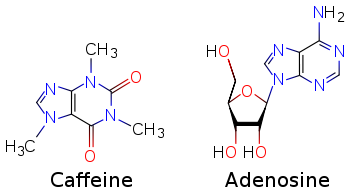
Caffeine (C8H10N4O2) is the natural pesticide of coffee beans, paralyzing and killing insects that try to feed on them

According to Forbes.com:

Caffeine is a drug of abuse, like alcohol or cocaine, because it meets these two criteria: "reinforcing efforts" and "adverse effects which can cause harm to self or society." Reinforcing effects is science talk for "addictive": The more you have, the higher your tolerance levels and the more you need. Take it away, and you experience withdrawal symptoms.

C8H10N4O2 is a chemical compound found in beans, leaves and fruits of some plants. It's a natural pesticide for them, paralyzing and killing insects that try to feed on them. On humans it acts as a stimulant on the central nervous system and has psychotropic effects. It increases heart rate, blood pressure and respiration, and it is mildly diuretic.


Caffeine is structurally similar to adenosine. Image source: Wikipedia, public domain.

Recovering alcoholics or drug addicts will tell you caffeine is a "gateway drug"--it increases the chances of their falling back into addiction.

Overuse can develop into "caffeinism," which may cause muscle twitching, insomnia, headaches and heart palpitations. Even with a mild overdose, about 300 mg or so (3 cups of coffee, 7 cups of chai), you can get "caffeine jitters". You can actually die from an overdose of coffee.


McDonald's | "Don't Talk To Me / Coffee" commercial.

Comments from Google Buzz:

Vamsi Balakrishnan - Voltaire used to drink ~40 cups of coffee a day...:)

Ves Dimov, M.D. - He had developed tolerance. The same phenomenon is commonly observed in drug addicts.

Vamsi Balakrishnan - Still, I think it's amazing. I wonder what his withdrawal would have been like. Bennie Franklin also had some sort of deal with caffeine.

I think alcohol tolerance would have been better than drug tolerance for analogy...but I'm not really sure. (is the following correct as an analogy?)

Alcohol tolerance = induction of enzymes --> can literally drink more than once could, though still doing damage along the way. --> I'd think caffeine would be like this...

Drug tolerance = like heroin --> more needed for same effects, but once some critical threshold is reached, person will die of OD. (too hungry at the moment to think clearly)

References:
Caffeine Poster Chart http://bit.ly/4yFjbC and Caffeine content for coffee, tea, soda http://bit.ly/4OVo8
The 5 Phases of Caffeine Intake http://bit.ly/3tslld
"Death by Caffeine Test: How much of your favorite energy drink, soda, or caffeinated food would it take to kill you?" http://bit.ly/WtL3f
Coffee vs. Tea - Infographic of Health Benefits and Risks http://goo.gl/StIsr
Caffeine is a major source of antioxidant activity in coffee. WebMD, 2011.

Wednesday, August 18, 2010

How to keep your brain in top performance shape - BBC video


Look After Your Brain - Brainsmart - BBC video.

Get these right and your brain will be in top shape:

- Diet - slow and steady release of glucose
- Water
- Exercise
- Sleep

Read more: http://www.bbc.co.uk/scotland/brainsmart

Monday, August 9, 2010

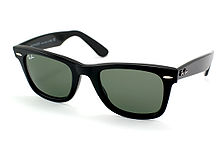
People behaved more selfishly and dishonestly when working in a dimly lit room or when wearing sunglasses

Researchers found that people working in a dimly lit room were more likely to cheat about their own performance on a task in order to earn more money than people working in a well-lit room.

Darkness may create a sense of illusory anonymity that disinhibits self-interested and unethical behaviors. It appears to induce a false sense of concealment, leading people to feel that their identities are hidden.

References:
Dim Lighting and Sunglasses Encourage Unethical Behavior in Study. WebMD.
Image source: Ray Ban Original Wayfarer, Wikipedia, Creative Commons Attribution-Share Alike 3.0 Unported license.

Comments from Twitter and Facebook:

@scanman: RT @DrVes: when working in a dimly lit room http://goo.gl/fb/erLEf

@doctorwhitecoat: Clubbing/bars? RT @DrVes People behaved more selfishly/dishonestly when in a dimly lit room or when wearin sunglasses http://goo.gl/fb/erLEf

Mike Cadogan: "Recently started working in the office with the light on...feeling better and more energetic already, though not sure about the selfish/dishonest part..."

Wednesday, August 4, 2010

Using the Internet for health purposes was associated with increased depression

The rapid expansion of the Internet has increased the ease with which the public can obtain medical information. Most research on the utility of the Internet for health purposes has evaluated the quality of the information or examined its impact on clinical populations. Little is known about the consequences of its use by the general population.

Health-related Internet use was associated with small but reliable increases in depression (i.e., increasing use of the Internet for health purposes from 3 to 5 days per week to once a day was associated with 0.11 standard deviations more symptoms of depression, P = 0.002).

Using the Internet for health purposes was associated with increased depression. The increase may be due to increased rumination, unnecessary alarm, or over-attention to health problems.

In contrast, using the Internet to communicate with friends and family was associated with declines in depression.

References:
Negative consequences from the use of internet for health information - CDC (PDF) http://goo.gl/Fgcq via http://goo.gl/947F
Image source: Wikipedia, public domain.

Updated: 08/12/2010

Wednesday, July 7, 2010

Peace and Love


Ringo Starr's Peace and Love Birthday Wish 2010: Ringo Starr asks everyone to join him in a Peace & Love moment on his birthday July 7 2010 at noon where ever you are. "Perhaps one day everyone will have a moment of Peace & Love all over the world".