From the NYTimes:
Prof. Mueller almost immediately noticed a previously hidden cluster in, of all things, pole-vaulting. Several high school and college athletes each year were killed or paralyzed simply by missing the pit with the pole, falling on their heads off the landing pad, or sliding down the pole and hitting their heads on hard surfaces. Pits were soon expanded and surrounded with softer padding.
Mueller detected a strange number of paralytic accidents in organized swimming, all from relay-type dives into water that was too shallow — resulting in today’s minimum depths.
Concussion Recovery - Mayo Clinic Video
References:
Professor Tracks Ghastly Injuries in Hope of Prevention - NYTimes.com.
Showing posts with label Trauma. Show all posts
Showing posts with label Trauma. Show all posts
Friday, June 10, 2011
Wednesday, May 4, 2011
Video: Teens See Dangers of Texting While Driving
AssociatedPress — May 16, 2010 — Teenagers are driving through an obstacle course with their cell phones in hand to see why texting while driving is so dangerous.
Related:
Proposal: All cell phones sold in Chicago to allow parents to block their children from texting while driving. Chicago Tribune, 2011.

Thursday, April 14, 2011
Effect of deployment on mental health of soldiers: common disorders and alcohol misuse more frequent than PTSD
 This Lancet study examined the consequences of deployment to Iraq and Afghanistan on the mental health of UK armed forces from 2003 to 2009.
9990 (56%) participants completed the study questionnaire (roughly 8000 regulars, 1700 reservists).
The prevalence was:
- 19·7% for symptoms of common mental disorders
- 13% for alcohol misuse
- 4% for post-traumatic stress disorder (PTSD)
Deployment to Iraq or Afghanistan was significantly associated with alcohol misuse for regulars (odds ratio 1·22) and with post-traumatic stress disorder (PTSD) for reservists (2·83)
Symptoms of common mental disorders and alcohol misuse remain the most frequently reported mental disorders in UK armed forces personnel, whereas the prevalence of post-traumatic stress disorder (PTSD) was low.
Deployment to Iraq or Afghanistan was significantly associated with alcohol misuse for regulars (odds ratio 1·22) and with post-traumatic stress disorder (PTSD) for reservists (2·83)
Symptoms of common mental disorders and alcohol misuse remain the most frequently reported mental disorders in UK armed forces personnel, whereas the prevalence of post-traumatic stress disorder (PTSD) was low.
References:
What are the consequences of deployment to Iraq and Afghanistan on the mental health of the UK armed forces? A cohort study. The Lancet, Volume 375, Issue 9728, Pages 1783 - 1797, 22 May 2010.
Image source: The Los Angeles Times.
Wednesday, April 6, 2011
Decompression illness - Lancet review
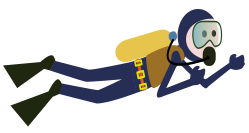 Decompression illness is caused by intravascular or extravascular bubbles that are formed as a result of reduction in environmental pressure (decompression).
Types of decompression illness
The term decompression illness covers 2 entities:
- arterial gas embolism, in which alveolar gas or venous gas emboli (via cardiac shunts or via pulmonary vessels) are introduced into the arterial circulation
- decompression sickness, which is caused by in-situ bubble formation from dissolved inert gas
Both syndromes can occur in divers, compressed air workers, aviators, and astronauts, but arterial gas embolism also arises from iatrogenic causes unrelated to decompression.
Risk of decompression illness is affected by immersion, exercise, and heat or cold.
Clinical features of decompression illness
Manifestations of this condition include a wide range of symptoms and signs:
- itching and minor pain
- neurological symptoms
- cardiac collapse
- death
Treatment of decompression illness
First-aid treatment is 100% oxygen. Definitive treatment is recompression to increased pressure, breathing 100% oxygen.
Adjunctive treatments include fluid administration and prophylaxis against venous thromboembolism in paralysed patients.
Prognosis of decompression illness
Treatment is effective in most cases although residual deficits can remain in serious cases, even after several recompressions.
References:
Decompression illness. The Lancet, Volume 377, Issue 9760, Pages 153 - 164, 8 January 2011.
Image source: OpenClipArt.org, public domain.
Treatment of decompression illness
First-aid treatment is 100% oxygen. Definitive treatment is recompression to increased pressure, breathing 100% oxygen.
Adjunctive treatments include fluid administration and prophylaxis against venous thromboembolism in paralysed patients.
Prognosis of decompression illness
Treatment is effective in most cases although residual deficits can remain in serious cases, even after several recompressions.
References:
Decompression illness. The Lancet, Volume 377, Issue 9760, Pages 153 - 164, 8 January 2011.
Image source: OpenClipArt.org, public domain.
Saturday, April 2, 2011
Headache? It could be that blade in skull (CNN video)
CNN: "I've got these stabbing pains" - Man complains about migraine, finds he has had a knife in his brain for 4 years.
Related reading:
Monday, March 21, 2011
Sports Health With Cleveland Clinic (video)
There are a lot more sports health-related video from Cleveland Clinic on YouTube. I find many of these useful but they often don't get the numbers of views they deserve, for example the video embedded above was watched only 20 times as of 03/23/2011 (it was posted on 01/10/2011).
Wednesday, February 9, 2011
Protecting the brain from concussion: $20-helmet is a good way to protect $100,000 education
Neuropsychologist Kim Gorgens makes the case for better protecting our brains against the risk of concussion -- with a compelling pitch for putting helmets on kids: A $20-helmet is a good way to protect $100,000 education. "Mind your (brain) matter."
Just consider the following tragic story:
Before he shot himself fatally in the chest Thursday, the former Chicago Bears defensive back Dave Duerson sent family members text messages requesting that his brain tissue be examined for the same damage recently found in other retired players.
As a longtime force in the N.F.L. players union, Duerson, 50, was keenly aware of chronic traumatic encephalopathy, the degenerative brain disease linked to depression, dementia and occasionally suicide among more than a dozen deceased players. He had expressed concern in recent months that he might have had the condition.
“This thing has the whole union community pretty shaken up.”
Related:
Before Shooting Himself, Duerson Asked That His Brain Be Studied, NYTimes, 2011.
Former NFL payer shot himself in chest so that his brain could remain intact for examination for encephalopathy, NYTimes, 2011.
Tuesday, February 1, 2011
Cars Decide If Driver Is Drunk - Video
Associated Press: An alcohol-detection prototype that uses automatic sensors to instantly gauge a driver's fitness has the potential to save thousands of lives, but could be a decade away from everyday use in cars.
Motorists under the influence of drugs are a growing threat on U.S. roads. If you think about driving on a Friday or Saturday evening about 16% of the vehicles - one in six of the cars - the driver will be under the influence of an illicit or licit drug.
"Drugged driving" hampers judgment, reaction time, driving skills and memory.
Related:
16% of motorists may be under the influence of drugs during weekends - one in six of the cars
Tuesday, January 25, 2011
Concussion Recovery - Mayo Clinic Video
Mayo Clinic Video: The news has been filled with stories about the dangers of concussions in sports like high school football. Doctors at Mayo Clinic say that pulling kids off the field until they have completely recovered is key to keeping them healthy. But some players who've suffered concussions choose not to get back in the game. They don't want to risk possible consequences of repeat and serious head injury.
Laptop Computer-Induced Erythema ab Igne
Erythema ab igne is a skin reaction caused by exposure to heat. It is also known as hot water bottle rash, fire stains, and toasted skin syndrome. Ignis is the latin word for "fire".
In this case report a 12-year-old boy presented with erythema ab igne on his left thigh caused by the use of a laptop computer. This is the youngest of the 10 reported patients with this laptop-induced dermatosis since its first description in 2004.
Erythema ab igne is a reticular, pigmented, sometimes telangiectatic dermatosis that is caused by prolonged exposure to a heat or infrared source (see pictures from different cases at DermNet).
In laptop-induced erythema ab igne, the localization on the thighs and asymmetry are characteristic. The heat originates from the optical drive, the battery, or the ventilation fan of the computer.
References:
Laptop Computer–Induced Erythema ab Igne in a Child and Review of the Literature. PEDIATRICS Vol. 126 No. 5 November 2010, pp. e1227-e1230 (doi:10.1542/peds.2010-1390)
Erythema Ab Igne. eMedicine Specialties > Dermatology > Environmental.
Image explanation: I was not able to find online photos of erythema ab igne labeled for reuse, hence the image of a laptop from Amazon.com.
In this case report a 12-year-old boy presented with erythema ab igne on his left thigh caused by the use of a laptop computer. This is the youngest of the 10 reported patients with this laptop-induced dermatosis since its first description in 2004.
Erythema ab igne is a reticular, pigmented, sometimes telangiectatic dermatosis that is caused by prolonged exposure to a heat or infrared source (see pictures from different cases at DermNet).
In laptop-induced erythema ab igne, the localization on the thighs and asymmetry are characteristic. The heat originates from the optical drive, the battery, or the ventilation fan of the computer.
References:
Laptop Computer–Induced Erythema ab Igne in a Child and Review of the Literature. PEDIATRICS Vol. 126 No. 5 November 2010, pp. e1227-e1230 (doi:10.1542/peds.2010-1390)
Erythema Ab Igne. eMedicine Specialties > Dermatology > Environmental.
Image explanation: I was not able to find online photos of erythema ab igne labeled for reuse, hence the image of a laptop from Amazon.com.
Wednesday, January 19, 2011
Participation in clean-up of oil spill associated with airway injury and chromosomal damage
In 2002, the oil tanker Prestige spilled more than 67 000 tons of bunker oil, heavily contaminating the coast of northwestern Spain. The study population included local fishermen who were highly exposed (n = 501) or not exposed (n = 177) to oil. They were evaluated 2 years after the spill.
Elevated markers of airway injury
Persons exposed to oil were at increased risk for lower respiratory tract symptoms (risk difference, 8.0). However, lung function did not significantly differ between the groups. Exposed participants also had higher levels of exhaled vascular endothelial growth factor (risk difference, 44.8) and basic fibroblast growth factor (risk difference, 16.0).

Chromosomal damage
A higher proportion of exposed participants had structural chromosomal alterations (risk difference, 27.4), predominantly unbalanced alterations.
Participation in clean-up of a major oil spill was associated with persistent respiratory symptoms, elevated markers of airway injury in breath condensate, and chromosomal damage.
References:
Elevated markers of airway injury
Persons exposed to oil were at increased risk for lower respiratory tract symptoms (risk difference, 8.0). However, lung function did not significantly differ between the groups. Exposed participants also had higher levels of exhaled vascular endothelial growth factor (risk difference, 44.8) and basic fibroblast growth factor (risk difference, 16.0).

Human chromosomes (grey) capped by telomeres (white). Image source: Wikipedia, public domain.
Chromosomal damage
A higher proportion of exposed participants had structural chromosomal alterations (risk difference, 27.4), predominantly unbalanced alterations.
Participation in clean-up of a major oil spill was associated with persistent respiratory symptoms, elevated markers of airway injury in breath condensate, and chromosomal damage.
References:
Health Changes in Fishermen 2 Years After Clean-up of the Prestige Oil Spill. Ann Intern Med, October 19, 2010, vol. 153 no. 8 489-498.
Wednesday, December 8, 2010
16% of motorists may be under the influence of drugs during weekends - one in six cars
Motorists under the influence of drugs are a growing threat on U.S. roads. If you think about driving on a Friday or Saturday evening about 16% of the vehicles - one in six of the cars - the driver will be under the influence of an illicit or licit drug.
"Drugged driving" hampers judgment, reaction time, driving skills and memory.
"Drugged driving" hampers judgment, reaction time, driving skills and memory.
Am I driving a car? Drunk motorist stuns police http://goo.gl/D9NOa
Wednesday, November 10, 2010
Marathon-associated ailments: “too hot,” “too cold,” “too dry,” “too wet” and “wobble and fall down”
According to the NYTimes, the most common and potentially life-threatening marathon-associated ailments are “too hot,” “too cold,” “too dry,” “too wet” and “wobble and fall down”. These translate into heat stroke, hypothermia, dehydration, low blood sodium and collapse, respectively.
The medical professionals at this year's NYC marathon had ice-water dunk tanks to treat runners who developed high fevers. Handheld i-Stat machines enabled them to analyze the chemistry of the runners’ blood, then dispense the right amounts of intravenous fluids, salts and sugar.
Understanding the Heart Hazards of Marathon Running - Video - TIME.com.
References:
Doctor Prepared for the Worst at Marathon. NYTimes.
Faces at the Finish - Interactive Feature - NYTimes.
Running With the Elites - Slide Show - NYTimes.
The medical professionals at this year's NYC marathon had ice-water dunk tanks to treat runners who developed high fevers. Handheld i-Stat machines enabled them to analyze the chemistry of the runners’ blood, then dispense the right amounts of intravenous fluids, salts and sugar.
Understanding the Heart Hazards of Marathon Running - Video - TIME.com.
References:
Doctor Prepared for the Worst at Marathon. NYTimes.
Faces at the Finish - Interactive Feature - NYTimes.
Running With the Elites - Slide Show - NYTimes.
Thursday, October 14, 2010
Distracted Walking Featured in the New Windows Phone Ads
Distracted driving has gained much attention lately because of the inflated crash risk posed by drivers using cellphones to talk and text. But phones aren't just distracting drivers; they make pedestrians inattentive too.
Distracted walking combines a pedestrian, an electronic device and an unseen crack in the sidewalk, the pole of a stop sign, a toy left on the living room floor or a parked (or sometimes moving) car.
There are plenty of examples of the dangers of distracted walking in the two videos embedded in this page. These are also examples of "distracted life" in general:
References:
Forget Gum. Walking and Using Phone Is Risky. NYTimes.
Video: Stop texting while driving. Terrifying. All drivers should watch this.
Friday, August 6, 2010
98% of People Cannot Drive Safely Using Cell Phones According to a Study
Driving while talking on a cell phone is extremely hazardous for most people.
Only a tiny fraction of “supertaskers” can do both simultaneously without ill effect - 2.5% of people studied could successfully drive and use a cell phone at the same time.
It took most people 20% longer to hit the brakes and increased following distances 30%, meaning they failed to keep pace in the simulator with virtual traffic. Also, their memory performance dropped 11% and their ability to do the math fell 3%.
Video: Stop texting while driving (http://bit.ly/S6osm). Terrifying. All drivers should watch this. Warning: This video may not be suitable for minors.
References:
97.5% Can't Drive Safely Using Cell Phones. WebMD.
Video: Stop texting while driving. Terrifying. All drivers should watch this.
Texting while driving increases crash risk 23 times
AT&T Don't Text While Driving Documentary (video).
From Twitter:
@BiteTheDust: RT @DrVes: 98% of People Cannot Drive Safely Using Cell Phones http://bit.ly/cWMcLH 100% of drivers think they are in the 2%!
Only a tiny fraction of “supertaskers” can do both simultaneously without ill effect - 2.5% of people studied could successfully drive and use a cell phone at the same time.
It took most people 20% longer to hit the brakes and increased following distances 30%, meaning they failed to keep pace in the simulator with virtual traffic. Also, their memory performance dropped 11% and their ability to do the math fell 3%.
Video: Stop texting while driving (http://bit.ly/S6osm). Terrifying. All drivers should watch this. Warning: This video may not be suitable for minors.
References:
97.5% Can't Drive Safely Using Cell Phones. WebMD.
Video: Stop texting while driving. Terrifying. All drivers should watch this.
Texting while driving increases crash risk 23 times
AT&T Don't Text While Driving Documentary (video).
From Twitter:
@BiteTheDust: RT @DrVes: 98% of People Cannot Drive Safely Using Cell Phones http://bit.ly/cWMcLH 100% of drivers think they are in the 2%!
Thursday, August 5, 2010
Sport Injuries: MRIs of hips of hockey players show abnormalities in 70% - are they clinically significant?
 A study included M.R.I.’s of the hips of 21 professional hockey players and 21 college players. They showed abnormalities in 70 percent of the athletes, even though these hockey players had no pain or only minimal discomfort that did not affect their playing. More than half had labral tears, rips in the cartilage that stabilizes the hip.
“M.R.I.’s are so sensitive,” Dr. Musahl said. “They frequently show little tears or fraying everywhere. And it is very, very common to have a small labral tear in your hip — it doesn’t mean you have to have the particular symptoms.”
References:
Personal Best - Sports Injuries - Go to a Doctor or Tough It Out? NYTimes.com.
Wednesday, July 28, 2010
Evaluation of driving risk in dementia - practice parameter update
For patients with dementia, the following characteristics are useful for identifying
patients at increased risk for unsafe driving:
- Clinical Dementia Rating scale (Level A)
- caregiver’s rating of a patient’s driving ability as marginal or unsafe (Level B)
- history of crashes or traffic citations (Level C)
- reduced driving mileage or self-reported situational avoidance (Level C)
- Mini-Mental State Examination scores of 24 or less (Level C)
- aggressive or impulsive personality characteristics (Level C)

Evaluation of driving risk in dementia (click to enlarge the image).
The following characteristics are not useful for identifying patients at increased risk for unsafe driving:
- patient’s self-rating of safe driving ability (Level A)
- lack of situational avoidance (Level C)
patients at increased risk for unsafe driving:
- Clinical Dementia Rating scale (Level A)
- caregiver’s rating of a patient’s driving ability as marginal or unsafe (Level B)
- history of crashes or traffic citations (Level C)
- reduced driving mileage or self-reported situational avoidance (Level C)
- Mini-Mental State Examination scores of 24 or less (Level C)
- aggressive or impulsive personality characteristics (Level C)
Evaluation of driving risk in dementia (click to enlarge the image).
The following characteristics are not useful for identifying patients at increased risk for unsafe driving:
- patient’s self-rating of safe driving ability (Level A)
- lack of situational avoidance (Level C)
References:
Practice Parameter update: Evaluation and management of driving risk in dementia. Neurology 2010;74:1316–1324 (PDF)
Practice Parameter update: Evaluation and management of driving risk in dementia. Neurology 2010;74:1316–1324 (PDF)
Wound Closure Adhesive Strips


Walgreens Wound Closure Adhesive Strips: adhesive strips used to secure, close and support small cuts and wounds.
Tuesday, May 11, 2010
17% of food-related asphyxiations were caused by hot dogs - "the perfect plug for a child's airway"
 From Consumer Reports health blog:
Small toys and foods that are choking hazards should carry warning labels - and some hot dog brands already do.
About 17% of food-related asphyxiations were caused by hot dogs. In total, 41% were caused by food items including:
- hot dogs
- grapes
- carrots
- hard candy
Food manufacturers should design new foods and redesign existing foods to avoid shapes, sizes, textures and other characteristics that increase choking risk to children, to the extent possible.
Food manufacturers should design new foods and redesign existing foods to avoid shapes, sizes, textures and other characteristics that increase choking risk to children, to the extent possible.
"If you were to take the best engineers in the world and try to design the perfect plug for a child's airway, it would be a hot dog," says statement author Gary Smith. "I'm a pediatric emergency doctor, and to try to get them out once they're wedged in, it's almost impossible."
References:
Hot dogs under fire: Doctors push for stronger labeling
http://www.aap.org/advocacy/releases/feb2210studies.htm
http://www.aap.org/advocacy/releases/feb2210studies.htm
Image source: Wikipedia, GNU Free Documentation License.
Related:
Kinder Surprise egg seized at U.S. border - banned by law as a choking hazard to young children http://goo.gl/UNUoG - Sold around the world.
Friday, April 30, 2010
Subscribe to:
Posts (Atom)


