Showing posts with label Africa. Show all posts

Tuesday, November 24, 2009

Terror Charges: From Minneapolis to Somalia

Muslims in Mumbai protest against terrorismImage by Bird Eye via Flickr

Yesterday, terrorism charges were unsealed in the District of Minnesota against eight defendants. According to the charging documents, the offenses include providing financial support to those who traveled to Somalia to fight on behalf of al-Shabaab, a designated foreign terrorist organization; attending terrorist training camps operated by al-Shabaab; and fighting on behalf of al-Shabaab.

The charges were announced November 23 by David Kris, Assistant Attorney General for National Security; B. Todd Jones, U.S. Attorney for the District of Minneapolis; and Ralph S. Boelter, Special Agent in Charge of the Minneapolis field office of the Federal Bureau of Investigation.

"The recruitment of young people from Minneapolis and other U.S. communities to fight for extremists in Somalia has been the focus of intense investigation for many months," Assistant Attorney General Kris said. "While the charges unsealed today underscore our progress to date, this investigation is ongoing. Those who sign up to fight or recruit for al-Shabaab’s terror network should be aware that they may well end up as defendants in the United States or casualties of the Somali conflict."

According to court documents, between September 2007 and October 2009, approximately 20 young men, all but one of Somali descent, left the Minneapolis area and traveled to Somalia, where they trained with al-Shabaab, a designated terrorist organization. Many of them ultimately fought with al-Shabaab against Ethiopian forces, African Union troops, and the internationally-supported Transitional Federal Government (TFG).

Court documents also state that the first group of six men traveled to Somalia in December 2007. Prior to their departure, the six men, as well as others in the Minneapolis area, raised money for the trips and held meetings in which they made phone calls to alleged co-conspirators in Somalia.

Upon arriving in Somalia, the men from Minneapolis allegedly stayed at safe-houses in Somalia and attended an al-Shabaab training camp. The al-Shabaab training camp included dozens of other young ethnic Somalis from Somalia, elsewhere in Africa, Europe and the United States. Purportedly, the trainees were trained by, among others, Somali, Arab and Western instructors in the use of small arms, machine guns, rocket-propelled grenades and military-style tactics. Allegedly, the trainees also were indoctrinated with anti-Ethiopian, anti-American, anti-Israeli and anti-Western beliefs.

According to court documents, on Oct. 29, 2008, Shirwa Ahmed, one of the men who left Minnesota in December 2007 and attended the al-Shabaab training camp, took part in one of five simultaneous suicide attacks on targets in northern Somalia. The attacks appeared to have been coordinated. Shirwa Mohamud Ahmed, also known as "Shirwa," drove an explosive-laden Toyota truck into an office of the Puntland Intelligence Service in Bossasso, Puntland. Other targets included a second Puntland Intelligence Service Office in Bossasso, the Presidential Palace, the United Nations Development Program office and the Ethiopian Trade Mission in Hargeisa. Including the suicide bombers, approximately twenty people were killed in the attacks.

Read the whole thing here.

Sunday, November 22, 2009

The Boy Who Harnessed The Wind by William Kamkwamba and Bryan Mealer


Stars: *****

Summary: The Boy Who Harnessed the Wind is the immensely engaging and inspiring true account of an enterprising African teenager who constructed a windmill from scraps to create electricity for his entire community. William Kamkwamba shares the remarkable story of his youth in Malawi, Africa. A nation crippled by intense poverty, famine, and the AIDS plague—and how, with tenacity and imagination, he built a better life for himself, his family, and his village. The poignant and uplifting story of Kamkwamba’s inspiration and personal triumph, co-written with Bryan Mealer, The Boy Who Harnessed the Wind has already won ringing praise from former Vice President and Nobel Laureate Al Gore as well as Paolo Coelho, internationally bestselling author of The Alchemist.

This incredible book was published October 09 by HarperLuxe, a division of HarperCollins. I fully intended to review it in October but things didn't work out that way. I love reading about life in Africa and reading stories of people who are very poor come into their own and succeed makes me hope for the future.

The book is not only about how William made a windmill but starts from when he was younger and spending his days playing to as he gets older and tries to continue his schooling, through a famine, spending his days reading books from the library, learning about electricity, trying things out for himself, working his way up to a windmill, getting electricity into his home and eventually getting noticed. The last few chapters cover what people noticed him and what was done afterward.

The story was very interesting and I rooted for him when he was figuring things out and feeling sad and worried when his city was going through the famine. William Kamkwamba is a remarkable man and I bet his parents are so very proud of him. I fully agree with the following testimonial about the book:


This book should be required reading in our schools where far too many students drop out because they, apparently, do not value education. Mr Kamkwamba doesn't just tell about the windmill and how he built it, he describes life and culture in Malawi, the struggles and horrors of the hunger season (which puts faces and hardships on the word, famine) and because of the famine the lack of fees that would allow him to continue in school. He foresaw that life could be different-better and pursued his dream to completion. This is a wonderful, positive story. Thanks for giving me an early opportunity to read it, learn and have hope in young people again.
Dorothy @ Books & More in Albion, MI
Dorothy Dickerson

Thanks to HarperCollins and Shelf Awareness for the opportunity to read this book.

Links of Interest
Browse Inside or View Discussion Guide or visit The Boy Who Harnessed the Wind
On Twitter? Follow the book @malawindmilbook or the author @wkamkwamba


Buy The Boy Who Harnessed The Wind on Amazon.com

Other Reviews
Ramya's Bookshelf, The Novel World, Killin' Time Reading, Starting Fresh (talks a lot about what the author is up to now)

Friday, October 9, 2009

Huh? News: Sudan Strategery

halloween cookies 02Image by slushpup via Flickr

"We've got to think about giving out cookies[…] Kids, countries -- they react to gold stars, smiley faces, handshakes, agreements, talk, engagement."

Maj. Gen. J. Scott Gration (Ret.)Special Envoy to SudanU.S. Envoy's Outreach to Sudan Is Criticized as NaiveWashington Post Foreign Service | Tuesday, September 29, 2009

Tuesday, October 6, 2009

US Embassy Conakry on Ordered Departure

Map from CIA World Factbook

The U.S. Department State has ordered the departure of non-emergency personnel and eligible family members of the U.S. Embassy in Conakry, Guinea on October 1. This occurred days after the country's military units opened fire on civilians and clashed with protesters at an opposition rally that killed over 150 people. The violence came about reportedly when political parties and trade unions defied the ruling National Council for Democracy and Development (CNDD) military junta's protest ban. The protest was organized against reports that CNDD Leader Moussa Dadis Camara might run for president in the January 2010 election.

The embassy evacuation is for an initial period of ten days according to the mission’s warden message. The message also indicates that the Embassy is prepared to assist U.S. citizens who wish to depart from Guinea. The Department of State issued a travel warning for Guinea, quick excerpt provided below:

"The Department of State warns U.S. citizens against travel to Guinea due to continuing civil unrest and the unpredictable nature of the current security situation. U.S. citizens are advised that the Department of State has ordered the departure of non-emergency personnel and eligible family members of the U.S. Embassy in Conakry, Guinea.

The U.S. Embassy in Guinea will be open for emergency American Citizens Services only. Citizens should be aware that depending on the security situation, the Embassy may be forced to suspend operations without advance notice. The international airport in Conakry is currently operating normally, however, flights may be suspended if the current security situation worsens. Land borders are also open at this time, but may close without warning. U.S. citizens who remain in Guinea despite this Travel Warning are urged to stay in their homes until the security situation returns to normal, to closely monitor media reports, and to follow all official instructions. U.S. citizens who must leave their homes for any reason are urged to exercise extreme caution, be particularly alert to their surroundings, and to avoid crowds, demonstrations, or any other form of public gathering. Visitors to Guinea should be familiar with their hotel evacuation plans, policies, or procedures. U.S. citizens in Guinea should carry their travel documents (i.e., passport, birth certificate, picture ID's, etc.) with them at all times. Additionally, U.S. citizens in the area are reminded to stay in contact with friends and family in the United States to keep them apprised of their current welfare and whereabouts.”

Related Item: OSAC: Guinea Violence | 091002 Guinea Violence.pdf

Sunday, October 4, 2009

We’re Building the Juba-Nimule Road in Sudan ...

It’s 8 months behind scheduleWe're spending $164 millionAnd nobody knows it’s funded and paid for by the American people

USAID’s OIG recently released its audit of the Juba-Nimule road. This was USAID/Sudan’s major road infrastructure activity in scope, cost, and the priority accorded to it by Government of Southern Sudan. The report says that the road originally built from 1928 to 1932, was upgraded to gravel standards in the early 1970s but was neglected for more than 22 years of civil war. The road connects Juba, the seat of the southern Sudanese government, with Uganda. From there, the road provides access to Kenya and the port of Mombasa.

Quick summary from the report:USAID/Sudan’s major road infrastructure activity is upgrading the 192 kilometer Juba-Nimule road from a gravel road to a paved road. The main goals of the Juba-Nimule road project are to foster economic growth by increasing capacity for trade, facilitating refugee resettlement and the transportation of humanitarian aid, and strengthening southern Sudanese capabilities in road maintenance and construction. This activity is one initiative under the Sudan Infrastructure Services Project, a 5-year, $700 million indefinite quantity contract1 through September 2011 with the Louis Berger Group, Inc.The project is currently 8 months behind schedule, primarily because policy questions arose during procurement of the main road construction subcontracts. Moreover, the total cost has risen from an estimated $87 million in the road’s feasibility study to the current estimate of $163.8 million. This increase was due to a number of factors, including erroneous assumptions and a lack of technical data in the feasibility study. Problems in bridge construction also contributed to higher costs. Finally, the audit determined that (1) none of the people interviewed along the Juba-Nimule road were aware that this road was being financed by the United States and (2) several contracts between the Louis Berger Group, Inc., and its subcontractors omitted required antiterrorism language.Excerpts from the audit:

  • The completion of the Juba-Nimule road was initially planned for March 2010. However, current estimates place the completion date in November 2010. This delay was caused principally by policy questions that arose during the procurement of the road construction subcontract. As a result of this delay, the overall estimated cost of the Juba-Nimule road increased by more than $7 million.

  • Federal law requires reasonable cost estimates before USAID initiates certain projects. Despite this requirement, the projected cost of the Juba-Nimule road increased 88 percent over the estimate in the road’s feasibility study. A major portion of this increase arose from the absence of sufficient technical data, which resulted in an underestimate of the material required. Moreover, erroneous initial assumptions also contributed to the increased projected costs. As a result, the road is costing millions of dollars more than originally estimated, and USAID operational planning was hindered.

  • The May 2007 feasibility study for the Juba-Nimule road, which was prepared by the Louis Berger Group, Inc. (Berger), and was completed prior to the initial obligation of funds under Task Order 2, estimated a maximum total cost of $87 million for upgrading the road to a double bituminous surface treatment standard. However, as of April 6, 2009, the road had an estimated budget of $163.8 million, or an increase of 88 percent over the amount in the feasibility study.
  • The planned completion dates for the erection of seven new bridges along the Juba-Nimule road were not met because of delays in foundation construction, which was exacerbated by poor initial designs. A significant cause of these problems was the lack of timely geotechnical data. As a result, overall project costs have increased, and USAID could ultimately bear the cost of potential claims for losses.

  • Effective branding of USAID projects is an important Agency objective. However, none of the people interviewed along the Juba-Nimule road were aware that the project is being funded by the United States. This occurred because community leaders were not disseminating this information to the grassroots level. […]The ineffectiveness of the current branding strategy means that people in southern Sudan are generally not aware that the Juba-Nimule road is being funded by the American people. Consequently, opportunities to create positive impressions of the United States are forfeited, hindering public diplomacy efforts in Sudan, an area of immense foreign policy interest to the United States. (italics added)
  • USAID regulations mandate that recipients of USAID assistance include in all subawards a provision based on Executive Order 13224 designed to prevent the financing of terrorist activities. Nevertheless, 6 of 15 subcontracts for the Juba-Nimule road did not contain this provision. This likely occurred because contractor officials mistakenly relied on other terrorism-related clauses and used templates that omitted the required language. Consequently, USAID funds could be at increased risk of being used to finance terrorist activities. (italics added)

USAID/OIG: Audit of USAID/Sudan's Road Infrastructure Activities |AUDIT REPORT NO. 4-650-09-009-P | September 28, 2009 | PDF

Thursday, August 27, 2009

Quote: Non-Portable Rights, Once More

EthiopiaImage by robynejay via Flickr

“When you go to another country, you don’t take your rights with you. As romantic and adventurous as it sounds to spontaneously pack up and travel the globe, when you don’t do your homework, reality can be harsh.”

Rory Linnane From Captured in Ethiopia: An American nightmareThe Daily Cardinal - August 26, 2009(A UW-Madison sophomore recounts her experience being detained and deported from her host country of Ethiopia).

Tuesday, August 18, 2009

Insider Quote: More Aspiration Than Fact

“Interagency rivalries and jealousies diminished the overall effectiveness of the mission. The effort to instill a “One Team, One Mission” approach was still more aspiration than fact.”

Inspection of Embassy Maputo, Mozambique (ISP-I-09-05A)Excerpted from Office of Inspector General Semiannual Report to the Congress, October 1, 2008 to March 31, 2009 | PDF

Wednesday, August 12, 2009

Snapshot: State Dept’s Africa Bureau

Map from state.gov

All but seven of its 48 posts have hardship pay over 15 percent. Eight receive danger pay. AF posts are also home to many entry-level officers, whose mentoring often suffers in the absence of seasoned supervisors. AF posts share the Department-wide deficiency in mid-level staff and a world-wide deficiency in ICASS staffing in relationship to other agencies’ overseas growth. The problem is exacerbated in AF posts because career and financial rewards are reserved for service in places like Iraq and Afghanistan.

The difficulty of work was compounded by 76 evacuations due to actual or threatened outbreaks of violence in the last decade alone.

Excerpt from The Bureau of African Affairs: | OIG Report Number ISP-I-09-63 August 2009 | PDF

Public Diplomacy: MIST has more Money than PAO

Here is one more stark reality when it comes to public diplomacy programs funded by DOD and by State:

"AFRICOM also provided military information support teams (MIST) to engage the public. MIST teams have exponentially more money to spend in a country than do embassy public affairs offices. In Somalia, for example, the Embassy had $30,000 to spend on public diplomacy while the MIST team had $600,000. Given the urgency of combating terrorism in Somalia, money was needed and the reported successes of MIST programs elsewhere served as a recommendation. Under MIST, AFRICOM inherited an established military practice of working closely with embassy public affairs officers to develop and fund effective programs."

Monday, August 3, 2009

Embassy Snapshot: “Historically-Difficult-to-Fill” Post

Embassy N’Djamena continued to be a “historically difficult-to-fill” post, and six out of eight key positions were filled by first-tour officers, and temporary duty personnel, or were vacant at the time of inspection. Long gaps due to curtailments and the difficulties of staffing the Embassy result in post experiencing a series of temporary duty stopgaps or vacancies in key positions. Adequate mentoring and development of first-tour officers is difficult if not impossible when there are not enough experienced, permanent officers at post.

“Historically difficult-to-staff” posts are those where more than 50 percent of vacancies receive no more than three bids on assignments for three out of four years.

Inspection of Embassy N’Djamena, ChadExcerpted from Office of Inspector General Semiannual Report to the Congress, October 1, 2008 to March 31, 2009 | PDF

Friday, July 31, 2009

Video of the Week: Jacqueline Novogratz on Escaping Poverty

Jacqueline Novogratz tells a moving story of an encounter in a Nairobi slum with Jane, a former prostitute, whose dreams of escaping poverty, of becoming a doctor and of getting married were fulfilled in an unexpected way.

One of the most innovative players shaping philanthropy today, Jacqueline Novogratz is redefining the way problems of poverty can be solved around the world. Drawing on her past experience in banking, microfinance and traditional philanthropy, Novogratz has become a leading proponent for financing entrepreneurs and enterprises that can bring affordable clean water, housing and healthcare to poor people so that they no longer have to depend on the disappointing results and lack of accountability seen in traditional charity and old-fashioned aid.The Acumen Fund, which she founded in 2001, has an ambitious plan: to create a blueprint for alleviating poverty using market-oriented approaches. Indeed, Acumen has more in common with a venture capital fund than a typical nonprofit. Rather than handing out grants, Acumen invests in fledgling companies and organizations that bring critical -- often life-altering -- products and services to the world’s poor. Like VCs, Acumen offers not just money, but also infrastructure and management expertise. From drip-irrigation systems in India to malaria-preventing bed nets in Tanzania to a low-cost mortgage program in Pakistan, Acumen’s portfolio offers important case studies for entrepreneurial efforts aimed at the vastly underserved market of those making less than $4/day.It’s a fascinating model that’s shaken up philanthropy and investment communities alike. Acumen Fund manages more than $20 million in investments aimed at serving the poor. And most of their projects deliver stunning, inspiring results. Their success can be traced back to Novogratz herself, who possesses that rarest combination of business savvy and cultural sensitivity. In addition to seeking out sound business models, she places great importance on identifying solutions from within communities rather than imposing them from the outside. “People don’t want handouts," Novogratz said at TEDGlobal 2005. "They want to make their own decisions, to solve their own problems.”In her new book, The Blue Sweater, she tells stories from the new philanthropy, which emphasizes sustainable bottom-up solutions over traditional top-down aid.

From TED.com

Monday, April 13, 2009

Update on the Death of FSO Brian Adkins

The GW Hatchet has an update today on the death of Brian Adkins, a Foreign Service Officer who was on his first diplomatic assignment in Addis Ababa, Ethiopia.


"An Ethiopian man has pleaded guilty to the murder of 2007 alumnus Brian Adkins, a Foreign Service officer found dead in his Ethiopia home this February, according to Adkins' family.

State Department officials told family members that a man named "Sammy" had admitted to beating Adkins to death with a baseball bat in the Ohio native's African home. Sammy, a local man whose full name was not available, had met Adkins through mutual friends who frequently played video games at the house.

At a preliminary hearing on March 27, Sammy pleaded guilty to second degree murder and stealing Adkins' possessions, said Dan Adkins, Brian's father, in an interview. Dan Adkins added that prosecutors are seeking to convict the man of first degree murder, which could result in the death penalty."


Read the whole thing here.


Related Post:

One of Ours is Dead in Addis Ababa


Updated 5/2/09 @ 6:55 pm
- For more on Brian Adkins:
See “Appreciation: A Life Dedicated to Service: Brian Adkins: (1983-2009)”
By Charles Hornbostel │ FS Journal May 2009 │ pp. 41-43

Brian Adkins - Legacy.com Guest Book


Wednesday, April 8, 2009

There Was an Old Pirate Who Swallowed a Fly…

U.S. Navy photo by Mass Communications Specialist
2nd Class Jason R. Zalasky/Released


This news broke about a couple hours ago -- Reuters is reporting that Somali pirates have seized a Danish-owned, U.S.-operated container ship on Wednesday with 21 American crew on board. The report quoted Andrew Mwangura of the Kenya-based East African Seafarers' Assistance Programme as saying that the 17,000 ton vessel was hijacked in the Indian Ocean 400 miles off the Somali capital Mogadishu, the crew is safe and that the vessel had been tentatively identified as the Maersk Alabama.


Maersk Alabama, formerly named Alva Maersk is a 17,400 ton vessel. If the ship has been correctly identified it is owned by Maersk Line, Limited or Denmark's A.P. Moller/Maersk A.S. According to globalsecurity, Maersk Line, Limited, a subsidiary of Denmark's A.P. Moller/Maersk A.S., is independently controlled by a board of directors comprised entirely of U.S. citizens. Also this: “Maersk Line, Limited is based in Norfolk, Virginia, and is one of the Department of Defense's primary shipping contractors. It has been a reliable partner for the government in peacetime and war for almost 30 years. The company operates vessels registered in the United States in full compliance with U.S. laws and regulations. It manages a fleet of nearly 50 ships in commercial and government service, including vessels requiring Top Secret security clearances.”


Just a day ago, the Fifth Fleet out of Bahrain had issued a Combined Maritime Forces Issues New Alert to Mariners (Release #058-09) saying in part:

"The notice also reiterates the fact that despite increased naval presence in the region, ships and aircraft are unlikely to be close enough to provide support to vessels under attack. The scope and magnitude of problem cannot be understated. The area involved off the coast of Somalia and Kenya as well as the Gulf of Aden equals more than 1.1 million square miles (2.5 million square kilometers), roughly four times the size of Texas or the size of the Mediterranean and Red Seas combined. The length of the Somali coastline is roughly the same length as the entire Eastern Seaboard of the United States."


Do you think the pirates of Aden have finally chomped more than they could swallow this time?


Friday, March 20, 2009

Officially In: J. Scott Gration, U.S. Special Envoy for Sudan

On March 18, President Obama announces Major General Scott Gration as U.S. Special Envoy for Sudan:

Today, I am pleased to join Secretary Clinton in announcing the appointment of Major General J. Scott Gration (USAF, retired) as the U.S. Special Envoy for Sudan. General Gration’s personal and professional background, and his service to the country as both a military leader and a humanitarian, give him the insights and experience necessary for this assignment.


Sudan is a priority for this Administration, particularly at a time when it cries out for peace and for justice. The worsening humanitarian crisis there makes our task all the more urgent.


I have made clear my intention to work with the international community to end the suffering. That means supporting the full, unobstructed deployment of the joint African Union/United Nations peacekeeping force and the negotiation of a political solution that will give the people of Darfur a meaningful voice in the decisions that affect their future. The Government of Sudan’s disastrous decision to expel humanitarian relief organizations leaves a void that will be filled by deprivation and despair and they will be held accountable for the lives lost.


As we work to bring peace to Darfur, we will continue to work with both parties to Sudan’s Comprehensive Peace Agreement to ensure its full and complete implementation. All parties must see this through if Sudan and the surrounding region are to enjoy lasting stability.


I have worked closely and directly with General Gration for several years, and have traveled with him to refugee camps in Chad filled with those who were displaced by the genocide in Darfur. He is a valued personal friend and I am pleased he has accepted this assignment. He knows the region, has broad experience, and has my complete confidence. Standing alongside Secretary Clinton and Ambassador Rice, his appointment is a strong signal of my Administration’s commitment to support the people of Sudan while seeking a lasting settlement to the violence that has claimed so many innocent lives.


Without the need for Senate confirmation, this special envoy like Holbrooke, Mitchell, Fried, and Stern, should be off and running or flying shortly, right?


Friday, March 13, 2009

The Polygamist by Ndabaningi Sithole


Stars: ****1/2

Summary: Seven wives share Menzi Dube, head of a Rhodesian tribal village, on a rotating basis. And although they enjoy all the benefits of a rich and progressive husband, they are less than satisfied with having to share him sexually. When one of the tribe's young wives goes astray, having found the several weeks' interval between her husband's visits unbearable, the other women are most sympathetic. This provokes extensive and spirited debate over the mutual plight as female "victims" of the age-old custom of polygamy.

Ndanda, Dube's eldest son, who has been away for many years, returns wearing European clothes, as most of Dube's family has been longing to, has been educated in missionary schools as a teacher, and plans to marry a girl from a Westernized family... just one girl. Dube vows to save his son from the certain disaster of monogamous union, but Ndanda resists, determined to bring his people into the "modern age."

I picked this book up at a local thrift store because the title caught me. This was an incredibly interesting book and fairly well-written, considering it was written by a man in a Rhodesian prison. It was published in 1972 by The Third Press which seems to be defunct*. You can't even buy it new on amazon although there are some used copies, most for $40 - $90 though depending on publishing date.

Even though the book is fiction, the characters all follow typical Rhodesian cultural practices at the time. It's quite thought provoking because you see the up and down sides to polygamy as well as their other cultural practices. Also the polygamy that is/was practiced in Africa isn't the same as the polygamy families in the U.S. and elsewhere. Following is a quote that shows another of the cultural practices:
"A little girl entered the hut. She carried a wooden bowl of water. As soon as
she approached Dube, she knelt down and then placed the bowl on the circular
hearth which was made of mud. "There's the water, father," she said rising to
her feet. "That's all right, my child" acknowledge Dube tenderly [...]She rose
to her feet and soon left the hut. Custom observance was very strict at Dube's
village just as it was at other villages. The little girl had to announce
formally, "There's the water," to indicate that it was her pleasure to bring
that water, and that it was now at their disposal. The formal announcement had
the effect of releasing the water from her, so to speak, so that it could be
used freely."
Similarly, here's a quote regarding polygamy:
"...and so each of the seven wives had a special attribute which endeared her to
Dube. They were beautiful, hardworking, and obedient and, with the exception of
Manyati, they all had children. [...] But if the younger wives of Dube secured
his goodwill with their youthfulness and beauty, the older ones held the
executive and political reins on his estate."
In the chapter that's from, he explains each wife, where she was found, how many heads of cattle was paid for her, what he likes about her and how many children she has born for him so far. It's very evident that he truly loves ALL of his wives and for different reasons and that he treats them all fairly.

The ending was really enjoyable and I wish this book was available to a wider public because I most definitely recommend this to everyone.

* Third Press, Joseph Okpaku Publishing Company Inc. (New York, 1970; ceased publishing in 1986 - from wikipedia

Tuesday, February 24, 2009

USAID Local Employees Arrested in Zimbabwe

Air Force Commander Air Marshal Perence Shiri (middle)
Photo from newzimbabwe.com

As best as I could trace this ridiculous story, it started in mid December when newzimbabwe.com reported that Zimbabwe’s Air Force Commander Air Marshal Perence Shiri survived an attempt on his life. This is the same Perence Shiri who according to reports was the commander of the North Koeran-trained 5 Brigade army unit which was deployed in the Matabeleland and Midlands regions in 1982 to hunt down alleged dissidents. At the end of its activities, in 1986, human rights groups say 20 000 civilians were dead, thousands more missing and others displaced.


Shiri was reportedly hospitalised after suffering a gunshot wound to his arm, a senior official from Zimbabwe’s ruling Zanu PF party told the website. Shiri, driving alone in his official car, is said to have been leaving his farm in Mashonaland West Province on Saturday night when he was ambushed. “He came under fire from a sizeable number of professional hitmen. He survived the attack, although he was shot on the arm,” the official said, speaking on condition he is not named.


Zimbabwe’s Home Affairs Minister Kembo Mohadi said the attack on Shiri, who was alone at the time, appeared to be “a build-up of terror attacks targeting high-profile persons, government officials, government establishments and public transport systems”. Mohadi also said the attack on Shiri, 53, “showed the assailants were well trained and there was a clear attempt to destabilise the country through acts of terrorism”.


Mohaid's pronouncements is kind of like the equivalent of the red/severe level in DHS's homeland security threat advisory, only more cranky. One for the Huh? News, you think?

Let’s see -- a top military official was driving alone (It's Africa people, what happened to military escorts and aides?), he came under attack by “professional hitmen,” (I wonder if they’re the Fargo kind) and he was hit on the arm (or the palm of his hand in some other reports; apparently they're "well trained").


Borat could do a better job with this material if only Zim has not gone bat crazy.


On January 22, Frank Muchirahondo, a driver for USAID was arrested accused of shooting Air Force Commander Perence Shiri; Muchirahondo is facing attempted murder charges. Another USAID employee Daniel Mlenga, has apparently also been arrested.


Muchirahondo's lawyer Chris Mhike of Atherstone and Cook said bail was denied and his client’s application could not be heard and that the matter was postponed until February 24.


The US embassy has reportedly issued a statement condemning Muchirahondo's arrest and dismissing all allegations against the employee saying he was among other employees doing humanitarian work for the organisation at the time of the shooting. I could not locate any statement in state.gov or Embassy Harare’s website. If you have a link to the official statement, please let me know.

In the meantime, the Zimbabwe Human Rights NGO Forum (the Forum) has released a statement: The Zimbabwe Human Rights NGO is deeply concerned and condemns the failure by the political parties to ensure the release of Jestina Mukoko, the Director of the Zimbabwe Peace Project, Frank Muchirahondo and Daniel Mlenga, both USAID employees, and many other prisoners of conscience from Chikurubi Prison and other places of detention. We strongly believe that they are being held on frivolous, trumped-up political charges, which have no substance at law. Further, it is becoming increasingly evident that political prisoners were used as mere pawns by the political protagonists for political leverage.


Robert “Zimbabwe is mine” Mugabe must be getting his state of play from the Marcos playbook. When Ferdinand Marcos was in power, General Fabian Ver, his cousin, was the Philippines AFP Chief of Staff and his most trusted general (later implicated in the assassination of Benigno Aquino). Gen. Perence Shiri is as well, a cousin of Robert Mugabe and has been named the prime mover over the military’s ugly fight over the diamond fields in eastern Zimbabwe.


Power, money and perpetual rule – they can eat raw at a man’s soul and before long, nothing exist but an abject cast of a man lost for all eternity.


Lost, er unless, they put you in a refrigerated crypt like this one, or in trading cards like this one.


Tuesday, February 10, 2009

Shock and Awe: The Zimbabwe Edition

The Telegraph headline screams “Zimbabwe dollar dead, says top economist.” “Zimbabwe Implosion,” says another headline from The Zimbabwean which also reports that the news from Zimbabwe is increasingly grim. "Collapsing infrastructure, hyperinflation, cholera, the world's highest HIV/Aids rate, a diaspora of refugees, and high unemployment are all signs of a country in ruins.”


FCO blogger in Harare Grace Mutandwa writes:

A few days ago in a monetary policy statement, Gono revalued the Zimbabwean dollar by removing 12 zeroes. A Z$100 trillion note, which was the highest note in circulation, is now Z$100. We have also now been told that Z$20 trillion (now Z$20) is now equivalent to US$1 and Z$2 trillion (Z$2) is now the same value as one South African Rand […] Everything is now sold in foreign currency. People who only six months ago lived very well of US$100 sent by relatives in the diaspora, now struggle to make ends meet. Zimbabweans have managed to devalue the American and British pound so much that now a US$100 does not go very far. Food is over-priced so are rentals and school fees.


Amidst all this is -- some shock and awe, the Zimbabwe edition. Martin Fletcher writing for the Times Online reports on an upcoming lavish one-day celebration for Fruitcake Bob’s 85th birthday. “[…] the zealots of his Zanu (PF) party are determined that it should be an occasion that their great leader will never forget.”

“It’s an important day for Zimbabweans to celebrate the life of our great leader and Africa’s hero,” he said. “Zanu (PF) continues to receive massive donations from the corporate world, ordinary Zimbabweans and from people from all walks of life and we are confident that this year’s celebrations will be the best.”


Wow! Great idea - arm twisting and aggressive shake downs are acceptable especially if you simply give them quaint names like “donations,” or "contributions." How about "alms" to aid the "poor?"


And so while Zimbabwe falls apart, here is the Birthday list to die for:

  • 2,000 bottles of champagne — Moët & Chandon and ’61 Bollinger
  • 500 bottles of whisky — Johnny Walker Blue Label, 22-year-old Chivas
  • 8,000 lobsters
  • 100kg king prawns
  • 3,000 ducks
  • 4,000 portions of caviar
  • 8,000 boxes of Ferrero Rocher
  • 16,000 eggs
  • 3,000 cakes — chocolate and vanilla
  • 4,000 packs of pork sausages
  • 500kg cheese
  • 4,000 packets of crackers


My. Oh. My! Would I go to hell if I wish for one live lobster to bite Bob’s nose? Never mind that – yes, I do wish!


The Johnnie Walker Blue Label (“the most acclaimed and exclusive Scotch Whisky in the world”) alone costs about $250 a bottle. And please tell these guys - Chivas Regal does not have a 22 but there is a 21 at $150 a pop. But hey -- why skimp? The better alternative is the Chivas 25 at only $270 a bottle – that’ll be quite a bargain, really -- especially if you buy a couple hundred bottles.


Let’s see -- for the Moët & Chandon champagne, you can get the Dom Perignon @ $170-$300+ (depending on the vintage). The 1961 Bollinger might be a problem though since it appears to be a rare vintage (some James Bond wanne-bes there, eh?). But I’m sure folks with money have a way around that; it’s not like they’re eating a slice of bread and water once a day, right?


These folks my friends, are aliens from Jupiter!


Thursday, February 5, 2009

One of Ours is Dead in Addis Ababa

About an hour ago, Reuters and AP reported that one of our diplomats has been found dead in his home in Addis Ababa, the capital city of Ethiopia.


AP quotes U.S. Embassy spokesman Michael McClellan as saying that the body was found over the weekend and that the police is investigating. The State Department has not officially released details of the death.


Reports have identified the deceased as Brian Adkins, a George Washington alumnus serving his first tour in the Foreign Service. Adkins, who would have turned 26 on Feb. 2, completed both his undergraduate and graduate studies at GW, graduating summa cum laude as an international affairs major from the Elliott School of International Affairs in 2005. He joined the State Department after receiving his master's degree in 2007 and was assigned to Ethiopia.


John Wysham, head of the Ethiopia desk at the State Department, said he was unable to provide details about Adkins' death or the homicide investigation. A Foreign Service officer also stationed in Africa is planning to accompany Adkins' body from Ethiopia to the United States, Wysham said. The casket will be transported by military aircraft.


More on Brian Adkins from the GW Hatchet here.


I am grateful that one of our officers is bringing him home. I can't begin to imagine how his loved ones must be feeling at this time. It is a sad and sorrowful day for the Foreign Service family.


Update 2/6: The Department's spokesman in response to a taken question has this one posted online:

At this time, we can confirm that an FSO died in Addis Ababa. The death is under investigation by the Bureau of Diplomatic Security, and we are coordinating closely with the Government of Ethiopia. We will provide details as they become available.


Updated 5/2/09 @ 6:55 pm
- For more on Brian Adkins:

See “Appreciation: A Life Dedicated to Service: Brian Adkins: (1983-2009)”
By Charles Hornbostel │ FS Journal May 2009 │ pp. 41-43

Brian Adkins - Legacy.com Guest Book


Wednesday, February 4, 2009

“King of Kings” Threw a Tantrum

Photo from Agência Brasil
L
icensed under a Creative Commons Attribution 2.5 Brazil


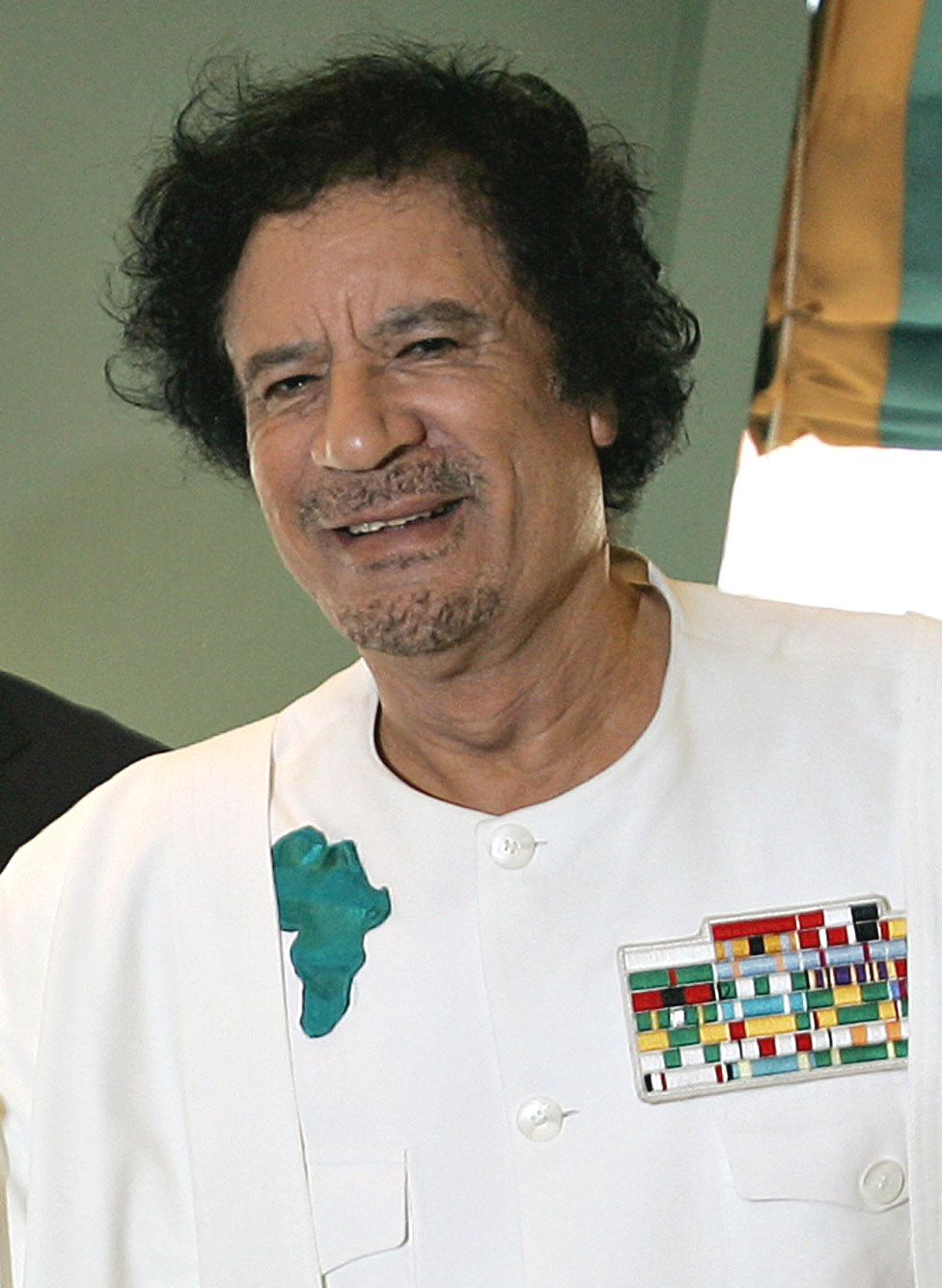
Kenya’s Daily Nation reported late yesterday that the African Union met until the wee hours but failed to agree on the creation of a new body to move the continent towards a single government. “It all unraveled when Libyan leader Muammar Gaddafi stormed out of the meeting room just after 2 am this morning and a few minutes later, all the leaders filed out.”


The newspaper’s sources indicated that
Colonel Gaddafi, who is chairman of the AU stormed out because he did not agree with his colleagues on three main issues:

  • The naming of the new authority to run Africa.
  • Col Gaddafi demanded that he should be given the title: “king of kings’’ but his colleagues refused.
  • There was no agreement on the nature of portfolios to be created.


Col Gaddafi was recently elected by the heads of state of the 53-member union behind closed doors at a summit in Ethiopia. "I shall continue to insist that our sovereign countries work to achieve the United States of Africa," he said in his inaugural speech. The chairmanship of the African Union is a rotating position held by heads of state for one year. Apparently, this year it was the turn of a North African leader to chair the bloc, and what do you know - Col Gaddafi was the only one present.


Which works out just perfectly! He could not remake the Arab world in the 1990s, so the beginning of the new century must start with a new project - the unification of the African continent into the “United States of Africa.” And who else but the Leader and Guide of the Revolution and longest-serving head of government in the world have the guts to do this?


Tantrums are temporary setbacks. Don’t worry, he’ll be baaack.


Thursday, January 29, 2009

Ambassador McGee Slogs on in Fruitcake Bob’s Zimbabwe

Here is something that will get Mugabe’s goat. On January 29, Ambassador James D. McGee, visited the Unicef warehouse in Workington, Harare. The visit by the ambassador followed the arrival, last week, of a USAID-provided consignment of nearly 440,000 bars of soap—valued at nearly US$365,000—to the UN Children’s Fund, which will provide it to humanitarian organizations to distribute as part of hygiene education programs in areas most affected by the cholera outbreak. During the tour, Ambassador McGee inspected warehouse commodities and received UNICEF briefing on distribution and general U.N. health and water, sanitation, and hygiene (WASH) programs. He also took questions from journalists during the event. Asked why the aid did not come through the host government, he made the following response (from SW Radio Africa):

Ambassador McGee: Let me be very frank about that. Too many things disappear when they go to the government. You all know that. I will just cite one recent case. Recently, 14 million dollars from the Global Fund which was destined for people who had HIV and AIDS disappeared. And we went to the Government, they said, ‘well, we needed that money for other things, - what’s more important than taking care of a person who has HIV and AIDS, getting the anti- retro-viral drugs that they need to continue to live. But the government took this money and freely admitted that they took this money and used it for something else. What? We don’t know. So of course, we are not going to give this money to government. We are not going to give these commodities to government, until government shows us that they can do the right thing and take care of the people of Zimbabwe. That’s all we ask- something very, very small. Take care of your own people.

Since October of last year, 2007, a year and a half ago, over US $250 million have come into Zimbabwe in assistance- 250 million dollars. Since 2002, one billion United States dollars has come to Zimbabwe in assistance. I don’t want to hear anybody telling me about illegal sanctions. A billion dollars- can the government of Zimbabwe say that they spent a billion dollars on their people during that time? I don’t think so. So I don’t want to hear anything about illegal sanctions. It makes me angry when U.S. tax dollars have to go to feed the people of Zimbabwe, but I see a lot of people in government with 60 bedrooms in their house. You know what I am talking about, don’t you?


Wanna bet that this would make Bob the Destroyer cranky as hell? And yeah, yeah, yeah ... he's going to threaten to kick Ambassador McGee out of there. Again. Can't somebody please convince Bob to get out already, like somebody convinced Marcos to leave the Philippines in 1986 for Hawaii? Dictators may have "staying power" but in the end they
are either deposed, tried and executed (not necessarily in that order) or exiled to rot and die in some foreign country. Unless rotting in your own country while taking everyone with you, is the more er, patriotic thing to do.