From the NYTimes:
Prof. Mueller almost immediately noticed a previously hidden cluster in, of all things, pole-vaulting. Several high school and college athletes each year were killed or paralyzed simply by missing the pit with the pole, falling on their heads off the landing pad, or sliding down the pole and hitting their heads on hard surfaces. Pits were soon expanded and surrounded with softer padding.
Mueller detected a strange number of paralytic accidents in organized swimming, all from relay-type dives into water that was too shallow — resulting in today’s minimum depths.
Concussion Recovery - Mayo Clinic Video
References:
Professor Tracks Ghastly Injuries in Hope of Prevention - NYTimes.com.
Showing posts with label Sports. Show all posts
Showing posts with label Sports. Show all posts
Friday, June 10, 2011
Wednesday, April 6, 2011
Decompression illness - Lancet review
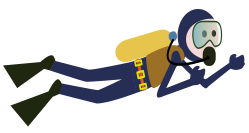 Decompression illness is caused by intravascular or extravascular bubbles that are formed as a result of reduction in environmental pressure (decompression).
Types of decompression illness
The term decompression illness covers 2 entities:
- arterial gas embolism, in which alveolar gas or venous gas emboli (via cardiac shunts or via pulmonary vessels) are introduced into the arterial circulation
- decompression sickness, which is caused by in-situ bubble formation from dissolved inert gas
Both syndromes can occur in divers, compressed air workers, aviators, and astronauts, but arterial gas embolism also arises from iatrogenic causes unrelated to decompression.
Risk of decompression illness is affected by immersion, exercise, and heat or cold.
Clinical features of decompression illness
Manifestations of this condition include a wide range of symptoms and signs:
- itching and minor pain
- neurological symptoms
- cardiac collapse
- death
Treatment of decompression illness
First-aid treatment is 100% oxygen. Definitive treatment is recompression to increased pressure, breathing 100% oxygen.
Adjunctive treatments include fluid administration and prophylaxis against venous thromboembolism in paralysed patients.
Prognosis of decompression illness
Treatment is effective in most cases although residual deficits can remain in serious cases, even after several recompressions.
References:
Decompression illness. The Lancet, Volume 377, Issue 9760, Pages 153 - 164, 8 January 2011.
Image source: OpenClipArt.org, public domain.
Treatment of decompression illness
First-aid treatment is 100% oxygen. Definitive treatment is recompression to increased pressure, breathing 100% oxygen.
Adjunctive treatments include fluid administration and prophylaxis against venous thromboembolism in paralysed patients.
Prognosis of decompression illness
Treatment is effective in most cases although residual deficits can remain in serious cases, even after several recompressions.
References:
Decompression illness. The Lancet, Volume 377, Issue 9760, Pages 153 - 164, 8 January 2011.
Image source: OpenClipArt.org, public domain.

Monday, March 21, 2011
Sports Health With Cleveland Clinic (video)
There are a lot more sports health-related video from Cleveland Clinic on YouTube. I find many of these useful but they often don't get the numbers of views they deserve, for example the video embedded above was watched only 20 times as of 03/23/2011 (it was posted on 01/10/2011).
Tuesday, January 25, 2011
Concussion Recovery - Mayo Clinic Video
Mayo Clinic Video: The news has been filled with stories about the dangers of concussions in sports like high school football. Doctors at Mayo Clinic say that pulling kids off the field until they have completely recovered is key to keeping them healthy. But some players who've suffered concussions choose not to get back in the game. They don't want to risk possible consequences of repeat and serious head injury.
Wednesday, November 10, 2010
Marathon-associated ailments: “too hot,” “too cold,” “too dry,” “too wet” and “wobble and fall down”
According to the NYTimes, the most common and potentially life-threatening marathon-associated ailments are “too hot,” “too cold,” “too dry,” “too wet” and “wobble and fall down”. These translate into heat stroke, hypothermia, dehydration, low blood sodium and collapse, respectively.
The medical professionals at this year's NYC marathon had ice-water dunk tanks to treat runners who developed high fevers. Handheld i-Stat machines enabled them to analyze the chemistry of the runners’ blood, then dispense the right amounts of intravenous fluids, salts and sugar.
Understanding the Heart Hazards of Marathon Running - Video - TIME.com.
References:
Doctor Prepared for the Worst at Marathon. NYTimes.
Faces at the Finish - Interactive Feature - NYTimes.
Running With the Elites - Slide Show - NYTimes.
The medical professionals at this year's NYC marathon had ice-water dunk tanks to treat runners who developed high fevers. Handheld i-Stat machines enabled them to analyze the chemistry of the runners’ blood, then dispense the right amounts of intravenous fluids, salts and sugar.
Understanding the Heart Hazards of Marathon Running - Video - TIME.com.
References:
Doctor Prepared for the Worst at Marathon. NYTimes.
Faces at the Finish - Interactive Feature - NYTimes.
Running With the Elites - Slide Show - NYTimes.
Thursday, August 5, 2010
Sport Injuries: MRIs of hips of hockey players show abnormalities in 70% - are they clinically significant?
 A study included M.R.I.’s of the hips of 21 professional hockey players and 21 college players. They showed abnormalities in 70 percent of the athletes, even though these hockey players had no pain or only minimal discomfort that did not affect their playing. More than half had labral tears, rips in the cartilage that stabilizes the hip.
“M.R.I.’s are so sensitive,” Dr. Musahl said. “They frequently show little tears or fraying everywhere. And it is very, very common to have a small labral tear in your hip — it doesn’t mean you have to have the particular symptoms.”
References:
Personal Best - Sports Injuries - Go to a Doctor or Tough It Out? NYTimes.com.
Thursday, July 15, 2010
Preventing diabetes, biological passport for athletes and more from the Lancet
 Low-dose combination therapy with rosiglitazone and metformin was highly effective in prevention of type 2 diabetes in patients with impaired glucose tolerance, with little effect on the clinically relevant adverse events of these two drugs.
Preventing type 2 diabetes with low-dose combinations: Lifestyle interventions aimed at reducing bodyweight, and use of metformin, thiazolidinediones, acarbose, and orlistat, reduce the risk of diabetes by 25—60% over 3—6 years
The biological passport and doping in athletics: A biological passport monitors an athlete's blood and body chemistry values over time to assess whether there has been a deviation from an established baseline, thus indirectly detecting illegal manipulation.
A long look at obesity: Even with their primitive understanding of nutrition, our neolithic forebears somehow made the “right choices”, thriving on a wholesome diet of nuts, seeds, and fruits with the occasional piece of meat. And what is more, their rare intake of animal protein could only have been obtained through vigorous exercise, which they would, of course, indulge in every day.
Saturday, June 26, 2010
The Beautiful Game can kill you: soccer/football managers and viewers at high risk for heart disease
Almost half of England's football managers have "significant" heart problems and their life-consuming, high-pressure jobs are a "recipe for potential disaster" according to cardiovascular experts. This is hardly surprising considering the range of emotions demonstrated by Fabio Capello (age 64), the current manager of the England national football team, in the videos below:
A stressful soccer match affects everybody involved including the spectators.
The Fédération Internationale de Football Association (FIFA) World Cup, held in Germany from June 9 to July 9, 2006, provided an opportunity to examine the relation between emotional stress and the incidence of cardiovascular events. Cardiovascular events occurring in 4,000 patients in the greater Munich area were prospectively assessed by emergency physicians during the World Cup.
On days of matches involving the German team, the incidence of cardiac emergencies was 2.66 times that during the control period. For men, the incidence was 3.26 times that during the control period, and for women, it was 1.82 times that during the control period.
On those days, the highest average incidence of events was observed during the first 2 hours after the beginning of each match.
Viewing a stressful soccer match more than doubles the risk of an acute cardiovascular event. In view of this excess risk, particularly in men with known coronary heart disease, preventive measures are urgently needed.
Video: Angry Capello [ Algeria Vs England ].
References:
Nearly half of football managers suffer serious heart problems. Independent, 2005.
Cardiovascular events during World Cup soccer. N Engl J Med. 2008 Jan 31;358(5):475-83.
A stressful soccer match affects everybody involved including the spectators.
The Fédération Internationale de Football Association (FIFA) World Cup, held in Germany from June 9 to July 9, 2006, provided an opportunity to examine the relation between emotional stress and the incidence of cardiovascular events. Cardiovascular events occurring in 4,000 patients in the greater Munich area were prospectively assessed by emergency physicians during the World Cup.
On days of matches involving the German team, the incidence of cardiac emergencies was 2.66 times that during the control period. For men, the incidence was 3.26 times that during the control period, and for women, it was 1.82 times that during the control period.
On those days, the highest average incidence of events was observed during the first 2 hours after the beginning of each match.
Viewing a stressful soccer match more than doubles the risk of an acute cardiovascular event. In view of this excess risk, particularly in men with known coronary heart disease, preventive measures are urgently needed.
Video: Angry Capello [ Algeria Vs England ].
References:
Nearly half of football managers suffer serious heart problems. Independent, 2005.
Cardiovascular events during World Cup soccer. N Engl J Med. 2008 Jan 31;358(5):475-83.
Super Bowl may trigger heart attacks - CNN, 2011.
Monday, April 5, 2010
The two current heavyweight world boxing champions both have PhDs, believe or not
Believe or not, but the two current heavyweight world boxing champions both have PhDs... The two researchers are the Ukrainian heavyweight boxers and brothers Wladimir and Vitali Klitschko.

In the summer of 1996, Klitschko finished Pereyaslav-Khmelnitsky Pedagogical Institute (Ukraine) and was accepted in the postgraduate study program of Kiev University. On 18 January 2001 in a conference hall of Kiev University of physical science and sports, Klitschko presented his doctoral dissertation and was awarded a Ph.D. in Sports Science. Klitschko speaks four languages: Ukrainian, Russian, German and English.


Wladimir Klitschko, called "Dr. Steel Hammer"(born 25 March 1976, Semipalatinsk, Kazakhstan), currently holds the IBF, WBO, IBO and Ring Magazine world heavyweight titles. His older brother, Vitali Klitschko, is the current WBC world heavyweight champion.
In the summer of 1996, Klitschko finished Pereyaslav-Khmelnitsky Pedagogical Institute (Ukraine) and was accepted in the postgraduate study program of Kiev University. On 18 January 2001 in a conference hall of Kiev University of physical science and sports, Klitschko presented his doctoral dissertation and was awarded a Ph.D. in Sports Science. Klitschko speaks four languages: Ukrainian, Russian, German and English.
Image source: Wikipedia, GNU Free Documentation License.

Vitali Klitschko, called "Dr. Ironfist", (born 19 July 1971 in Belovodsk, Kirghiz SSR, Soviet Union (now Kyrgyzstan) is a Ukrainian professional heavyweight boxer and the current WBC world heavyweight champion. He has the highest knockout percentage (94.9%) of any heavyweight boxing champion in overall fights.
Vitali is the first professional boxing world champion to hold a Ph.D. In 1996, he graduated from the Pereyaslav-Khmelnytsky Pedagogical Institute (Ukraine) and was accepted into the postgraduate study program at Kiev University. On 29 February 2000, he presented his doctoral thesis on "talent and sponsorship in sports" at the Kiev University of Physical Science and Sports, and his Ph.D. in Sports Science was conferred.
Image source: Wikipedia, GNU Free Documentation License.
References:
Klitschko KOs Chambers to keep titles. CNN.
Klitschko-Chambers round-by-round blog. CNN.
Wladimir Klitschko. Wikipedia.
Klitschko KOs Chambers to keep titles. CNN.
Klitschko-Chambers round-by-round blog. CNN.
Wladimir Klitschko. Wikipedia.
Vitali Klitschko. Wikipedia.
Friday, April 2, 2010
Concussions dangerous to teen brains - a hard to watch CNN video
"4 million sports and recreation-related concussions occur each year. The vast majority are suffered at the high school level, but few schools have rules governing how concussion is treated -- and few coaches are trained to identify it."
References:
Concussions extra dangerous to teen brains. CNN, 2010.
Friday, March 26, 2010
Worst disaster in the history of Mount Everest climbs and the only doctor on the mountain
When the worst disaster in the history of Mount Everest climbs occurred, Ken Kamler was the only doctor on the mountain. At TEDMED, he shares the incredible story of the climbers' battle against extreme conditions and uses brain imaging technology to map the medical miracle of one man who survived roughly 36 hours buried in the snow.
Sunday, March 21, 2010
Did I Win?
A bicyclist falls into the finish and asked if he did win.
Whether it was staged or not, I am glad that he looks OK after the crash in the video.
Monday, March 15, 2010
David Beckham suffered 'total rupture' of Achilles tendon
From CNN:
His injury occurred late on during Sunday's game against Serie A league opponents Chievo, as the apparent tendon rupture caused the midfielder to pull up while attempting to kick the ball, pain visible on his face.
Achilles rupture -- a tearing of the tissue connecting the heel to lower leg muscles -- can take months to heal, with physiotherapists advising weeks of rest before resuming even light exercise.
Doctors at his Italian club, AC Milan, have told him that, under their care, he should recover and be able to continue playing until he is 40.
They believe he's an 'extraordinary' athlete worth nurturing and that he will make a full recovery over the summer.
Beckam, age 34, said that he hopes to make a swift and full recovery. I wish him the same.
References:
CNN.
49-yo man with childhood asthma who was told he would never be able to do exercise runs a marathon every day for a year http://goo.gl/6fwOY
Sunday, August 9, 2009
Impressive: SprintCam v3 showreel, made during a recent rugby competition in the Stade de France, Paris
I-Movix SprintCam v3 NAB 2009 showreel from David Coiffier on Vimeo. Go to Vimeo f0r the HD version of the clip.
Link via Dr. Shock who used to play rugby when he was younger.
Subscribe to:
Posts (Atom)


