Showing posts with label Rheumatology. Show all posts

Tuesday, April 5, 2011

Gout update: New drugs for an old disease

Febuxostat is a non-purine-analogue inhibitor of xanthine oxidase that opened a new era in the treatment of gout.

Modified uricases

The use of modified uricases to rapidly reduce serum urate concentrations in patients with otherwise untreatable gout is progressing. Pegloticase, a pegylated uricase, is in development.

Drugs in development

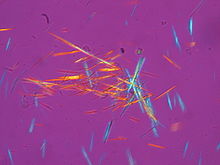
Transport of uric acid in the renal proximal tubule and the inflammatory response to monosodium urate crystals (shown above) are targets for potential new treatments.

Several pipeline drugs for gout related to the targets above include:

- selective uricosuric drug RDEA594
- various interleukin-1 inhibitors

References:
Gout therapeutics: new drugs for an old disease. The Lancet, Volume 377, Issue 9760, Pages 165 - 177, 8 January 2011.
Image source: Spiked rods of uric acid (MSU) crystals from a synovial fluid sample photographed under a microscope with polarized light. Wikipedia, public domain.

Monday, October 25, 2010

What's new in endocrinology from UpToDate

35% of UpToDate topics are updated every four months. The editors select a small number of the most important updates and share them via "What's new" page. I selected the brief excerpts below from What's new in endocrinology:

Osteoporosis

Denosumab (Prolia)

Denosumab is a fully human monoclonal antibody that specifically targets a ligand known as RANKL (that binds to a receptor known as RANK) which is a key mediator of osteoclast formation, function, and survival. Denosumab was approved for the treatment of postmenopausal women with osteoporosis at high risk for fracture (history of osteoporotic fracture, multiple risk factors for fracture) or patients who have failed or are intolerant of other available osteoporosis therapies. Denosumab inhibits the formation, function, and survival of osteoclasts. It decreases bone resorption, increases bone mineral density (BMD), and reduces the risk of fracture.

Teriparatide (Forteo)

Teriparatide (parathyroid hormone) did not accelerate fracture healing in postmenopausal women with distal radial fractures.

Transdermal teriparatide patch worked as well as teriparatide injection in postmenopausal women with osteoporosis.

Orlistat (Xenical, Alli) in obesity

Severe liver injury has been reported rarely with the use of orlistat (13 reports). Over the ten year period of the review, an estimated 40 million people worldwide used orlistat.

References:
What's new in endocrinology and diabetes mellitus. UpToDate.
Image source: Flickr, Creative Commons license.
Wednesday, October 13, 2010

What's new in rheumatology from UpToDate

35% of UpToDate topics are updated every four months. The editors select a small number of the most important updates and share them via "What's new" page. I selected the brief excerpts below from What's new in rheumatology:

Lower dose colchicine for treatment of acute gout

A lower dose colchicine may have similar efficacy and fewer side effects than a traditional, higher dose regimen for patients with acute gouty arthritis. Colchicine given as 1.2 mg followed by one additional dose of 0.6 mg an hour later (total dose 1.8 mg) worked similarly to 1.2 mg followed by 0.6 mg every hour for up to six hours.

Nocturnal leg cramps

Quinine is no longer recommended due to the potential for serious side effects, drug interactions, and only modest benefit. Calcium channel blockers and vitamin B complex have limited effect.

Anti-CCP antibody testing in RA

Testing for anti-citrullinated peptide/protein antibodies (ACPA) has become common in the evaluation of patients for rheumatoid arthritis (RA). Second generation anti-cyclic citrullinated peptide (anti-CCP) antibodies had the highest utility, with higher specificity and similar sensitivity to rheumatoid factor (RF). Both RF and anti-CCP testing should be performed in patients suspected of having RA.

Golimumab for RA

Golimumab, a neutralizing human anti-tumor necrosis factor alpha monoclonal antibody, is administered subcutaneously once monthly for the treatment of rheumatoid arthritis, psoriatic arthritis and ankylosing spondylitis.

Rituximab for primary Sjogren's syndrome

Rituximab, which is used for the treatment of B cell lymphomas, rheumatoid arthritis, and other autoimmune and lymphoproliferative disorders, is a chimeric monoclonal antibody directed against the B cell antigen CD20. One course of rituximab treatment resulted in significant improvement in patients with Sjogren's syndrome (SS).

References:
What's new in rheumatology. UpToDate.

Wednesday, June 30, 2010

Cognitive behavioural treatment may work for low-back pain

Low-back pain is a common and costly problem. This study estimated the effectiveness of a group cognitive behavioural intervention in addition to best practice advice in people with low-back pain in primary care.

Over 1 year, the cognitive behavioural intervention had a sustained effect on troublesome subacute and chronic low-back pain at a low cost to the health-care provider.

References:
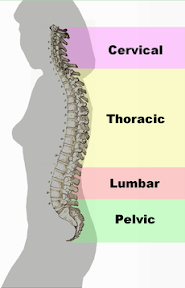
Image source: Different regions (curvatures) of the vertebral column, Wikipedia, public domain.

Thursday, May 20, 2010

Osteoporosis Drug Lasofoxifene May "Fight" Several Diseases But Increases Risk of Blood Clots

Lasofoxifene is a part of a class of drugs known as nonsteroidal selective estrogen-receptor modulators (SERMs). It has already been shown to decrease the bone loss associated with osteoporosis, like other SERMs, including tamoxifen and raloxifene. But until now its effect on other health conditions commonly experienced by postmenopausal women was unknown.

The women who took lasofoxifene had an 81% lower risk of estrogen-receptor (ER) positive breast cancer, a 32% lower risk of heart-related events like heart attack, and a 36% lower risk of stroke. "This is the first SERM that reduces the risk of all of these conditions at once."

However, not all the results were positive. As with other SERMs, women taking lasofoxifene had double to nearly three times the risk of experiencing a serious blot clot of the deep veins.

References:
Osteoporosis Drug May Fight Several Diseases. WebMD, 2010.
Image source: Flickr, Creative Commons license.

Thursday, May 13, 2010

Back and forth: Study fails to show link previously found between virus and chronic fatigue syndrome

A UK study analysing samples from patients with chronic fatigue syndrome has found no evidence of a link with a retrovirus (XMRV). The virus was first described in 2006.

Patients with chronic fatigue syndrome, also known as myalgic encephalomyelitis, often report that their condition—a mix of symptoms including extreme fatigue—began after an otherwise normal viral infection.

The xenotropic murine leukaemia virus-related virus (XMRV) was found in 67% of patients with chronic fatigue syndrome in a study reported last year (Science 2009,326:585-9).


The Gift of Time is a short film about the doctors who discovered the XMRV virus and the breakthru potential for prostate cancer.

References:

Sunday, April 4, 2010

Serotonin Blocker May Build New Bone in Osteoporotic Mice by Decreasing GI Serotonin Levels

From WebMD:

When investigators treated mice with an experimental drug that stopped the gut from synthesizing serotonin, they were able to reverse severe bone loss and essentially cure osteoporosis in the animals.


Serotonin May Hold Key to Halting Osteoporosis. NatureVideoChannel — February 05, 2010 — A drug that reverses osteoporosis in mice looks like a promising candidate for treating the human version of the disease. Gerard Karsenty and his colleagues at Columbia University Medical Center have shown that blocking the neurotransmitter serotonin--secreted from the gut--promotes bone growth. The research appears on-line at www.nature.com/naturemedicine - Yadav et al. Nature Medicine, 7 February 2010. DOI: 10.1038/nm.2098.

Most bone treatments work to block bone loss and make existing bone stronger. One drug, Forteo (teriparatide), does build new bone, but it requires daily injections and is limited to two years of use.

References:
Serotonin May Be a Key to Treat Osteoporosis. WebMD.

Wednesday, February 3, 2010

Treatment Options for Osteoporosis

I selected a few excerpts from a patient information review in the New York Times:

What is osteoporosis

Osteoporosis is defined as having a bone mineral density T score of minus 2.5 or lower. Lesser degrees of bone loss, known as osteopenia, may not benefit from drug therapy.

Bisphosphonates

The first drug licensed to counter osteoporosis, Fosamax, is now available generically as alendronate, which can be taken once a day or, at a higher dose, once a week. A reluctance on the part of many patients to adhere to a daily or weekly regimen led to the development of Boniva (ibandronate), administered by an intravenous injection every three months. To further simplify the frequency of administration, Reclast (zoledronic acid) was developed as a once-a-year intravenous treatment.

Actonel, alendronate and Boniva have been shown in three-year studies of postmenopausal women to reduce vertebral fractures by 41-50%, and less for other kinds of fractures.

A three-year study of Reclast found it to be somewhat more effective, with a 70 percent reduction in vertebral fractures, 41 percent in hip fractures and 25 percent in other fractures in postmenopausal women with osteoporosis.

Side Effects of Bisphosphonates

In a large study of Reclast, there was also a worrisome increase in atrial fibrillation — an irregular heart rhythm — not known to occur with other bisphosphonates.

Low-trauma fracture with a delay in healing or complete failure may occur after many years on bisphosphonates.

These side effects have prompted a warning that after five years on bisphosphonates, people should take a break from the drugs for at least a year.

Evista (raloxifene)

Evista (raloxifene) has an added advantage of reducing the risk of breast cancer, but the disadvantage of increasing the risk of deep vein blood clots.

Calcitonin

Somewhat less effective at reducing vertebral fractures is calcitonin, a naturally occurring hormone sold as Fortical and Miacalcin.

Forteo (teriparatide)

Finally, there is the bone-building drug Forteo (teriparatide), which must be self-injected once a day. This human parathyroid hormone can reduce vertebral fractures by 65 percent and other fractures by 53 percent within 18 months in patients with osteoporosis.

Denosumab

Under study is an entirely new bone drug, denosumab, a human monoclonal antibody. The drug inhibits a receptor that activates cells called osteoclasts that break down bone. In a large three-year study, denosumab, given by injection every six months to postmenopausal women with osteoporosis, reduced vertebral fractures by 68 percent and hip fractures by 40 percent.

References:
Options for Bone Loss, but No Magic Pill. NYT, January 4, 2010.
Denosumab is a monoclonal antibody that reduces fractures in osteoporosis
Image source: Flickr, Creative Commons license.

Monday, February 1, 2010

Presentation: Fructose drives hyperuricemia and uric acid then causes hypertension

The following presentation is by the nephrologist Joel Topf who writes the blog PBFluids.com. The subject is how fructose drives hyperuricemia and how uric acid then causes hypertension.

He used the slidecast feature on slideshare (http://www.slideshare.net/faqs/slidecast), so the slides have a full audio track.

Uric Acid, Fructose and Hypertension

View more presentations from Joel Topf.

Tuesday, January 12, 2010

Rheumatology

Editor: V. Dimov, M.D., Assistant Professor at the University of Chicago

Rheumatology Cases at ClinicalCases.org

Rheumatology News at CasesBlog

Rheumatology: Images in Clinical Medicine

Patient Information

Follow us and connect:


Published: 01/12/2010
Updated: 06/28/2010

Friday, September 25, 2009

Video: Routine Miracles with Dr. Conrad Fischer: Rheumatology


"This book covers medical advances that would once have been called miracles but are now merely routine. The patients' stories within this book yield hope, optimism, and triumph. This is the best time to come out of medical school and training. This fact will inspire and uplift everyone in the medical profession as well as all of us who must, at some point, rely on the art of medicine to see us through." -- Conrad Fischer, M.D.

Visit http://seefisch.wordpress.com for more information about Dr. Fischer and Routine Miracles or follow Dr. Fischer on Twitter: @SeeFisch

See all videos of Routine Miracles with Dr. Conrad Fischer on YouTube: http://bit.ly/2TPUkU

Wednesday, August 12, 2009

Denosumab (Prolia) is a monoclonal antibody that reduces fractures in osteoporosis

New osteoporosis medication denosumab is given by injection every 6 months, binds to a protein called RANKL. In a postmenopausal osteoporosis study, denosumab reduced new vertebral fractures by 68% http://bit.ly/14SYdU

Denosumab is a human monoclonal antibody to the receptor activator of nuclear factor-kappa B ligand (RANKL). Denosumab blocks binding of RANKL to RANK - inhibits development and activity of osteoclasts, decreases bone resorption, increases density.

RANK, also known as TRANCE Receptor, is a type I membrane protein that is expressed on the surface of osteoclasts and is involved in the activation of osteoclasts upon ligand binding. RANK is also expressed on dendritic cells and facilitates immune signaling. RANK ligand is found on the surface of osteoblasts, and T cells.

RANKL (Receptor Activator for Nuclear Factor κ B Ligand) is also known as TNF-related activation-induced cytokine (TRANCE).

Denosumab given SC twice yearly reduced risk of vertebral, nonvertebral, and hip fractures in women with osteoporosis.
Denosumab reduced bone resorption by 86% at 1 month - greater than the reductions seen with other antiresorptive drugs http://bit.ly/Jgx2G

Denosumab increased bone density, decreased fractures among men receiving androgen-deprivation therapy for prostate CA http://bit.ly/EQm3R

The Food and Drug Administration on June 1, 2010 approved the sale of Amgen’s osteoporosis drug Prolia (denosumab) to help prevent fractures in postmenopausal women.

Updated: 06/02/2010