Showing posts with label Practice. Show all posts

Wednesday, March 30, 2011

Average time patients spend waiting to see a health-care provider is 22 minutes

The average time patients spend waiting to see a health-care provider is 22 minutes. Orthopedists have the longest waits, at 29 minutes; dermatologists the shortest, at 20.

Patient satisfaction dropped significantly with each 5 minutes of waiting time. Even the term "waiting room" has a bad connotation. Many offices prefer "reception area" instead.

"I live my life in seven-minute intervals," says Laurie Green, a obstetrician-gynecologist in San Francisco who delivers 400 to 500 babies a year and says she needs to bring in $70 every 15 minutes just to meet her office overhead.

Measures the health-care industry is trying to minimize waiting time include:

- "Open-access" scheduling
- Minimize office visits
- Advance preparation
- Huddling up: "Mr. Jones is in a 15-minute slot, but we know he's a 45-minute guy"
- Teamwork
- Cutting "cycle time"
- Keep patients informed
- Survey patients

References:
Image source: OpenClipArt.org, public domain.

Friday, March 25, 2011

Only 62% of referring PCPs received consultation results from specialists

Communication between primary care physicians (PCPs) and specialists regarding referrals and consultations is often inadequate, with negative consequences for patients.

A study found that perceptions of communication regarding referrals and consultations differed.

For example, 69% of PCPs reported "always" or "most of the time" sending notification of a patient's history and reason for consultation to specialists, but only 34.8% of specialists said they "always" or "most of the time" received such notification.

Similarly, 80.6% of specialists said they "always" or "most of the time" send consultation results to the referring PCP, but only 62% of PCPs said they received such information.

The 3 practice characteristics associated with PCPs and specialists reporting good communication regarding referrals and consultations were:

- "adequate" visit time with patients
- receipt of quality reports regarding patients with chronic conditions
- nurse support for monitoring patients with chronic conditions

Twitter comments:

@westr: Case for EHRs...

@Kind4Kids: but then the inpatient and outpatient EHR need to "communicate".

@GruntDoc: 0% of ED docs... -- Only 62% of referring PCPs received consultation results from specialists

References:

Referral and Consultation Communication Between Primary Care and Specialist Physicians. Arch Intern Med. 2011;171(1):56-65. doi:10.1001/archinternmed.2010.480

Monday, November 29, 2010

How primary care doctors choose the specialists to refer their patients

Dr. Kirsch, a blogging gastroenterologist lists some of the reasons why certain medical specialists are chosen:

- Reciprocity - patients are referred in both directions
- Personal relationships
- Corporate enforcement keeping consultations within the network
- Economic pressure exerted by consultants to maintain referrals. I have seen this happen.
- Specialist willingness to do tests and procedures on request
- Habit
- Patient or family request

References:
How doctors choose which specialists they refer to. KevinMD.com
Image source: OpenClipArt.org, public domain.

Wednesday, November 17, 2010

"Choose primary care, give up $2.5 million"

Researchers at Duke University modeled the earning potential of cardiologists and primary care physicians between the ages of 22 and 65, taking into account medical school debt, earning potential and the age at which doctors begin earning an income. They conducted similar analyses for the average b-school, physician assistant and college graduate.

Over a career, a typical cardiologist earns more than $5 million, primary care physicians earn $2.5 million and business school grads earn $1.7 million. Meanwhile, physician assistants earn about $846,000 and college graduates earn about $340,000.

References:
Image source: OpenClipArt.org, public domain.

Friday, May 28, 2010

"I'm a Medicare doctor. Here's what I make"

From CNN:

Dr. Schreiber sees 120 patients a week - 30% of them are enrolled directly in Medicare, while another 65% have private insurance plans that peg their payments on Medicare's rates. Only 5% pay on their own.

Medicare pays between 63-72% of the costs for Schreiber's patients.

Four billing codes make up the "bread and butter" of claims submitted to Medicare:

- The first code represents a simple visit, which might include blood pressure and cholesterol checks. Schreiber gets about $44 from Medicare for the $70 fee he charges.

- The second and third codes correspond to a sick visit, when he spends 15 to 20 minutes evaluating a patient for symptoms such as coughing or shortness of breath. Schreiber charges $92 for a sick visit, of which Medicare pays about $58.

- The last billing code is a complex visit. "This is where a patient comes in with many problems like heart disease, hypertension, diabetes," he said. Such a visit requires about 30 minutes of his time.

Schreiber charges $120 for these visits, and Medicare pays $88 of that.

References:
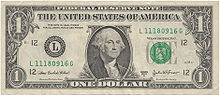
Image source: United States one-dollar bill. Wikipedia, public domain.

Tuesday, May 25, 2010

Doctors use Facebook Pages to connect with patients

With a 500-million large audience, many practices find that creating a Facebook presence can be an easy -- and free -- way to stay in touch with patients or attract new ones.

Businesses, including physician practices, can create something similar: pages (previously "fan pages"). Anyone on Facebook who elects to "become a fan" or like your page receives, on his or her own home page, any updates, photos, videos or Web links that you post.

Rather than having patients "friend" you on Facebook, you can direct them to this page. Having a moderator is important, because having someone dedicated to responding to people makes them feel more connected and encourages respectful and on topic discussions.

References:
Amednews: How Facebook fan pages can connect with patients.
Facebook Pages Manual.pdf - File Shared from Box.net via @sandnsurf.
10 Easy Ways to Enhance Your Facebook Page. Web Worrker Daily, 2010.
Image source: Wikipedia.

Updated: 07/15/2010

Wednesday, May 19, 2010

7.2% Decrease in Work Hours of U.S. Physicians Between 1996 and 2008

After remaining stable through the early 1990s, mean hours worked per week decreased by 7.2% between 1996 and 2008 among all physicians (from 55 hours per week in 1996-1998 to 51 hours per week in 2006-2008.

Excluding resident physicians, whose hours decreased by 9.8% due to duty hour limits imposed in 2003, nonresident physician hours decreased by 5.7%.

Physician fees decreased nationwide by 25% between 1995 and 2006, coincident with the decrease in physician hours.

A steady decrease in hours worked per week during the last decade was observed for all physicians, which was temporally and geographically associated with lower physician fees.

References:
Trends in the Work Hours of Physicians in the United States, February 24, 2010, Staiger et al. JAMA 303 (8): 747.

From Happy Hospitalist:

"That means your doctor earns 25% less today than they did just a decade ago. If you went to college and joined a company that said up front you would be paid 25% less in a decade than you were paid on the day you were hired, would you join them?

Why are physicians working fewer hours, a trend unique to doctors? The conclusion was reduced pay. Physicians just don't seem inclined to spend long hours in the office and hospitals to sacrifice their family life for the life of their patients when the the economic reward of doing so just isn't there.

I've talked with many subspecialists at Happy's hospital about the declining payment for their efforts. They all tell me exactly the same thing. They are going to work less and limit their hours as payment reductions come down the pipeline."

Image source: sxc.hu

Saturday, May 1, 2010

Some nurses paid more than family doctors - CNN

Primary care doctors were offered an average base salary of $173,000 in 2009 compared to an average base salary of $189,000 offered to certified nurse anesthetists, or CRNAs.

It's the fourth year in a row that CRNAs were recruited at a higher pay than a family doctor.

Comments from Google Buzz:

Jeffrey Benabio, MD - And soon doctor of nursing programs will graduate nurses who call themselves "doctor" in clinic. Physicians have been asleep at the wheel.

http://en.wikipedia.org/wiki/Doctorate_in_Nursing

Francesco Diana - without words

Anne Marie Cunningham - Both of these are very high salaries. As @scanman points out, they are unobtainable for most people working in health in India and countries. Can we tolerate such global inequality?

How should salaries in any part of the world be determined? Are both these groups paid too much?

At the moment there is a great deal of uncertainty on how the role of a doctor differs to the role of a nurse. Professor Alan Maynard suggests that professions are bad for healthcare. http://www.healthpolicyinsight.com/?q=node/458 What do you think?

Image source: OpenClipArt.org, public domain.
Thursday, April 1, 2010

UK GPs' income fell for the second year in a row in 2007-2008

Income before tax for the average GP was £100 324 (Euro 110 000; $150 000) before tax. This represents a fall of more than £3000 on 2006-2007, and £6000 on the peak year, 2005-2006, when the new contract came into force.

Expenses have risen and gross earnings have remained much the same, squeezing the net income GP principals earned from their practices.

References:
Image source: Openclipart.org, public domain.

Monday, March 29, 2010

Square For Mobile Payments At Political Fundraisers, Any Future Use at Doctor Offices?

Square is an innovative way to let people quickly and easily accept physical credit card payments from their mobile phone. The service was started by the Twitter co-founder Jack Dorsey.

Here is how Square works: A small device attaches to the phone via the headset/microphone jack. The device gets the power it needs to send data to the phone from the swipe of the card, and sends the information over the microphone connection. The device is compatible with both the iPhone and Android. It’s similar in some ways to PayPal, but anyone can now accept physical credit card payments, too. With no contracts or monthly fees. People are sent receipts by text and email. If you haven’t seen Square in action, check out this video:


References:
Square Now Being Used For Mobile Payments At Political Fundraisers
Video: Jack Dorsey Talks Square And I Buy Him Coffee With It
Square Turns Your iPad Into A Cash Register

Updated: 04/03/2010

Monday, March 22, 2010

Risks and Benefits for Physicians Who Use Social Media/Web 2.0

From the newsletter of the AMA, AmMed News: "Social media behavior could threaten your physician reputation and job prospects. Less is more." How do you expect doctors to use social media more when they are "bombarded" with headlines like this. There is little on the positive aspects of social media in this particular article although the AmMed News has published some better, more nuanced and balanced, reports on social media use in the past.

Practical benefits of social media for a physician practice

In addition to the obvious benefits for a physician practice to be open and social, there are some practical advantages of using social media. KevinMD shares the example of a patient who searches for "primary care doctor Nashua" (where he works) and Kevin is in the top search results due to his heavy use of social media - blog, Twitter, RSS, email subscriptions and Facebook. He also employs some "white hat" search engine optimization to ensure that his relevant pages are well-ranked by the search engines.

Benefits of social media in day-to-day clinical work

I use my own blogs as an useful archive of hand-picked and reviewed articles that is classified with appropriate labels (e.g. asthma, food allergy, etc.) and is fully searchable from any Internet-connected device: desktop PC, laptop, netbook, iPhone and even Kindle. All doctors may benefit if they use a similar resource created by them.

Let me give you a few real-life examples of social media use in clinical work:

- A patient needed instructions on dust mite control - I pulled my own mind map on the screen and discuss it with them http://bit.ly/cSxpQW

- A patient wanted to know about the new angioedema therapies - I pulled a different mind map and we discussed the different options http://bit.ly/caWmS7

- A colleague was unsure about "wine allergy" and its connection to wasp and bee venom - I searched my own blog on the cell phone: http://bit.ly/cykR2g and found a relevant article that I had read months ago which answered his clinical question http://bit.ly/bCdoeg

When working on the blog, I am often more like a "curator" of medical content (collecting the best articles and links) rather than a "producer" (creator of de novo content). Sometimes a doctor with a smartphone is more helpful than "a crowd" ("wisdom of crowds" or not) trying to recall an obscure fact, disease or complication from distant memory.

Benefits of social media for academic collaboration

The benefit of social media in academia is well-proven at this point if one is inclined to use such tools. For example, I have co-written more than 100 abstracts and 25 articles with the help of the online office suite Google Docs.

However, I don't think that a physician not using social media is at risk of becoming irrelevant (something mentioned recently). This is a limiting view.

I look forward to your feedback Please let me know what your think in the comment form embedded below this post.

Image source: OpenClipArt.org, public domain.

Friday, March 19, 2010

Nurses seeking more health care authority, patients "don't see a big difference"

From USA Today:

Each year, Wendy Fletcher says, she and two partners see more than 5,000 patients at their practice in Morehead, Ky. They are not doctors, but rather registered nurse practitioners who say they are able to increase access to health care and make it more affordable.

"None of us are trying to play doctor," she said.

Nurse practitioners are "gaining traction because people are seeing how cost-effective they are," Patton said. "The primary care physician shortage is going to drive it."

Judi James, 56, who lives in Morehead, Ky., said she gets her basic medical care from a nurse practitioner and has no qualms about going to see a nurse rather than a doctor.

"I really just don't see a big difference," James said. "The nurses are the ones who take care of you anyway, not always the doctor. If I need a specialist, she'll send me there."

Is this the beginning of the end of the primary care doctors in the U.S.?

Comments from Google Buzz:

Vamsi Balakrishnan - Then...what's the difference of a nurse from a PA?

Aidan Finley - There's no real difference between a NP and a PCP for routine patient care.

From Twitter: @CarmenBPhillips: at ped's office, my kids most often seen by NP.

Image source: OpenClipArt.org, public domain.

Monday, February 22, 2010

Using Google Docs to facilitate patient flow in a health center via a shared spreadsheet

From Google Docs Blog:

"It is difficult to keep track of which patients are in which rooms, how many patients are in the waiting room, and how far the doctors are falling behind with their patients for the day. If patients were late, canceled their appointments, or the waiting room was overflowing, the doctor would be the last to know."

As an experiment, Southeast Health Center incorporated the “Check-in Tracker”, a shared spreadsheet on Google Docs, into their clinic flow which you can see a sample of below:


Image source: Google Docs Blog.

"When a patient checks in at the front desk, the clerk types “a” into the slot where that patient was scheduled. Using the “change color with rules” function, that slot turns orange to let everybody in the clinic know that Dr. Mark’s 8:15 AM patient has arrived. If the 8:55 AM patient arrives at 9:15 AM, the front desk types in “L 9:15” into that slot and the slot turns pink. Dr. Mark can look at the Google spreadsheet and type an “x” if he is unable to see the late patient or “ok” if he has time to see the patient. Patients in rooms turn green and indicate which room number. Discharged patients turn blue.

Everybody communicates in real time, because we are all signed into the same account."

References:
Using Google Docs to facilitate patient flow in a community health center. Google Docs Blog.

Tuesday, February 2, 2010

Medical transcription cost: Offshore companies charge 13 cents per line vs. U.S. 15 cents

From AMedNews:

43% of hospitals and medical clinics sent transcription work out of the country in 2009 - up from 35% that did so in 2008.

Offshore companies charge an average of 13 cents per line of copy, while domestic ones charge an average of 15 cents.

Turnaround time wasn't much different because, for example, "In India, they are working while you are asleep."

Overseas medical transcription companies scored lower on quality because of missing words, grammatical errors, and misspellings.

Alternatives to transcriptions include:
- electronic medical records
- speech-recognition software

References:
Offshore medical transcribing becoming more common. AMedNews.com.

Related: Leading speech-recognition software from Amazon:

Monday, January 11, 2010

If you rent medical office space, now is a good time to negotiate lower rates

From AMA Medical News:

The real estate slump, combined with tighter credit, means that fewer medical office buildings are being built. But after a previous construction boom, there is still more supply than demand.

10.1 million square feet of medical office space were scheduled for completion in 2009, a decline of 30% from 2008. Only 7 million square feet are expected to be built in 2010.

Rents went down in most areas of the country, because fewer practices are expanding into new space. Some practices are becoming smaller while others are closing.

Nationally, the per square foot costs declined from $24.90 in the third quarter of 2008 to $23.90 in the third quarter of 2009.


Third quarter 2008
Third quarter 2009
U.S. average
$24.90
$23.90
Midwest
$20.80
$19.90
Texas
$22.67
$22.86
Southeast
$23.87
$23.20
Southwest/Mountain
$24.33
$23.68
Northeast
$25.14
$24.90
California/Pacific Northwest
$30.63
$29.45
Source: "2009 Real EstateInvestment Outlook," Marcus & Millichap's Medical Office Research Report, Oct. 12, 2009.

References:
Leasing market for medical offices hits downturn. AMA Medical News, Dec 2009.

Thursday, December 10, 2009

MarketWatch: Doctor shortage is good news for nurses

From MarketWatch:

"It's probably time to reconsider the current medical-visit vernacular. These days, instead of "I'm going to the doctor for a checkup," it's more like: "I'm going to the nurse practitioner." Certainly, most of the doctor appointments I've had in recent years were with nurses. Not that I think that's a problem. I've never had an issue with nurse practitioners, or no more issues than I've had with doctors. (No matter the professional degree, you either have a great bedside manner or you don't.) And what's wrong with letting nurses deal with ear infections and the like, especially if they have more time than the doctor to sit down and listen?

Full disclosure: My daughter is studying to be a nurse, so I've got a lot to love about expanding professional opportunities for nurse practitioners.

-- Andrea Coombes, assistant Personal Finance editor"

This logic however is a bit flawed.

References:
Primary-care doctor crunch offers no quick fix. MarketWatch.
Image source: sxc.hu

Wednesday, November 18, 2009

Tuesday, September 22, 2009

How to Prepare a Physician for a Media Interview (TV, radio, etc.)

A physician friend asked: "I am invited to a local TV channel to answer the viewers' questions on pneumonia this Wednesday, it will be live. They just told me that today. Do you ave any experience on this? How should I prepare? Do you have any idea?"

Here are few links and videos to help you:

Asthma TV News Spot. Doctor Anonymous.

Interview techniques and tips for doctors: How to sound and look good on camera. The Doctor's Channel.

Preparing Physicians for Media Interviews Helps Them Communicate More Comfortably and Effectively. The Permanente Journal, Kaiser Permanente.

1. Be prepared.
2. Expect off-the-wall questions.
3. Speak in plain English.
4. Be concise.
5. Guide the interviewer.
7. Don't guess.
8. Nothing's off the record.

Media Tips From Your PR Doctor For Effective Electronic Media Interviews.

Image source: Wikipedia, Creative Commons Attribution ShareAlike 2.5 License.

Wednesday, September 16, 2009

Physicians, fed up with the costs of their practice, quit medicine and shift careers

An ObGyn doctor to CNN:

"After 24 years, I'm working longer hours than ever," she wrote. "Insurance payments for patient care have stayed virtually the same for the last 15 years, while the cost of doing business, including health insurance, staff salaries and supplies have risen.

Wah hit her "peak" income year in 1990. Then she took a pay cut every year from 1993 onward, to eventually take no salary for two months prior to permanently shutting her office.

A first-ever survey of 12,000 primary care physicians showed that 10.1% of respondents planned to seek a job outside of health care in the next one to three years.

It takes a minimum of 10 to 12 years of training to become a doctor. Medical residency programs are mostly funded by Medicare to the tune of $9 billion to train about 100,000 residents annually."

Please read the whole article: Rx for money woes: Doctors quit medicine. CNN.

Image source: OpenClipArt.org, public domain.

Tuesday, July 14, 2009

Doctors Express hopes to franchise urgent care in U.S., doing what Papa John's did for pizza

From USA Today:

"Doctors Express hopes to franchise urgent care in U.S., doing for urgent health care what, say, Papa John's did for pizza — making sure the public can find it anywhere and always knows what it's going to get."

The chief medical officer Dr. Scott Burger (as in "Burger King"), who likes to be called Dr. Scott, is hoping to open 3,000 centers around the country, "so when people think of where they need to go for their health care needs, the first thing they think. .. is 'Where's the Doctors Express?'

"And unlike most other [medical] centers, many Doctors Express franchises can be owned by corporate managers who don't have a medical background. The company says it will guide them in everything from what credentials to look for when hiring staff to how to pick the best location."

References:
Doctors Express hopes to franchise urgent care in U.S. USA Today.
Image source: Open Clip Art Library, http://openclipart.org, public domain.