Showing posts with label Ophthalmology. Show all posts

Wednesday, May 18, 2011

1 in 40 adults older than 40 years has glaucoma

One in 40 adults older than 40 years has glaucoma with loss of visual function.

Adults have one of the two forms of glaucoma:

- open-angle glaucoma
- angle-closure glaucoma

Diagnosis

At least half of glaucoma cases are undiagnosed. Glaucoma is mostly asymptomatic until late in the disease when visual problems arise. Vision loss from glaucoma cannot be recovered.

Treatment

Glaucoma is treated with daily eye-drop drugs, but adherence to treatment is often unsatisfactory.

Similarities to the pathogenesis of common CNS diseases mean that common neuroprotective strategies might exist. Successful gene therapy has been used for some eye diseases and may be possible for the treatment of glaucoma in the future.

References:
Glaucoma. The Lancet, Volume 377, Issue 9774, Pages 1367 - 1377, 16 April 2011.
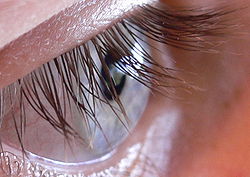
Image source: Eyelashes, Wikipedia, Steve Jurvetson, Creative Commons Attribution 2.0 Generic license.

Monday, May 16, 2011

Adaptive eyewear - BMJ video


BMJ medical innovations: Prof. Josh Silver from the Centre for Vision in the Developing World introduces adjustable eyewear that can be made for £1 and fitted by patients themselves.

Thursday, March 31, 2011

What to look for when buying sunglasses?

From the NYTimes:

Unprotected exposure to sunlight can cause significant damage to the eyes

Sunlight can burn the surface of the eye, causing a temporary and painful condition known as photokeratitis. Over time, unprotected exposure can contribute to cataracts, as well as cancer of the eyelids and the skin around the eyes.

UV exposure also may increase the risk of macular degeneration, the leading cause of blindness in people over age 65.

What to look for when buying sunglasses?

Look for labels indicating at least “98 percent UV protection” or that it “blocks 98 percent of UVA and UVB rays.” If there is no label, or it says something vague like “UV absorbing” or “blocks most UV light,” don’t buy them.

For the best defense, look for sunglasses that “block all UV radiation up to 400 nanometers,” which is equivalent to blocking 100 percent of UV rays

Sunglasses should cover the sides of your eyes to prevent stray light from entering. Wraparound lenses are best. Look for close-fitting glasses with wide lenses. Avoid models with small lenses, such as "John Lennon-style" sunglasses.

UV protection is not related to how dark the lens is. Sunglasses tinted green, amber, red and gray may offer the same protection as dark lenses.

Polarized lenses block the horizontal light waves that create glare. But remember, polarization in itself will not block UV light.

You should be able to find a pair of drugstore sunglasses for $10 to $20 that provide all the protection you need.

References:
Let the Sunshine in, but Not the Harmful Rays. NYTimes, 2011.
Image source: OpenClipArt.org, public domain.

Monday, February 14, 2011

How to protect your child's eyes from video games?


Dr. Paul Rychwalski of the Cole Eye Institute at the Cleveland Clinic talks to the local TV station WKYC about how you can protect your child's eyes from video games.

Twitter comments:

@pathophizz: shut them off? read them a book instead? go for a hike? geesh.

Thursday, October 14, 2010

Diabetic retinopathy is identified in a third of people with diabetes

Diabetic retinopathy is a common microvascular complication of diabetes, and remains the leading cause of preventable blindness in working-aged people. It is identified in a third of people with diabetes and associated with increased risk of life-threatening systemic vascular complications, including stroke, coronary heart disease, and heart failure.

Optimum control of blood glucose, blood pressure, and possibly blood lipids remains the foundation for reduction of risk of retinopathy development and progression.

Timely laser therapy is effective for preservation of sight in proliferative retinopathy and macular oedema, but its ability to reverse visual loss is poor.

Vitrectomy surgery might occasionally be needed for advanced retinopathy.

New therapies, such as intraocular injection of steroids and antivascular endothelial growth-factor agents, are less destructive to the retina than are older therapies, and could be useful in patients who respond poorly to conventional therapy.

Future treatment modalities include inhibition of other angiogenic factors, regenerative therapy, and topical therapy.

References:
Diabetic retinopathy [Seminar]. Ning Cheung, Paul Mitchell, Tien Yin Wong. Lancet, 2010.
Intensifying glucose control and adding fenofibrate to simvastatin each reduced progression of retinopathy in DM2 http://goo.gl/htHIK

Friday, July 16, 2010

Contact lenses change color when blood glucose increases in diabetics

In the future, diabetics may be able to wear contact lenses that continuously alert them to variations in their glucose levels by changing colors - potentially replacing the need to routinely draw blood throughout the day.

The non-invasive technology, developed by Chemical and Biochemical Engineering professor Jin Zhang at The University of Western Ontario, uses extremely small nanoparticles embedded into the hydrogel lenses. These engineered nanoparticles react with glucose molecules found in tears, causing a chemical reaction that changes their color.

References:
Nanocomposites could change diabetes treatment. The University of Western Ontario, 2010.
Image source: OpenClipArt.org.

Tuesday, July 13, 2010

Glaucoma eye drops drug Latisse used OTC to make long eyelashes but some now face side effects

From the NYTimes:

Latisse is the same formula as Lumigan, Allergan’s eyedrops for glaucoma, which reduces eye pressure but also happens to grow lashes. Both are also known as bimatoprost ophthalmic solution. In early 2009, Allergan introduced the drug as a lash enhancer.

A former primary care doctor runs www.latisse.bz, which boasts that it is the “largest Latisse retailer.” All it takes to get Latisse mailed out — without ever seeing him — is filling out a medical history, which he reviews, and typing in a valid credit card number.

But if people use Latisse without seeing a doctor, the side effects may come as a big surprise.

Eyelid discoloration “may be reversible” according to the manufacturer. A rare side effect that has captured the most attention is the chance that one’s hazel or blue eyes could turn brown — forever.

Image source: Eyelashes, Wikipedia, Steve Jurvetson, Creative Commons Attribution 2.0 Generic license.

Tuesday, February 23, 2010

Eyes Can Absorb Antioxidants From Green Tea, Which May Have a Protective Effect (In Rats)

Researchers fed laboratory rats green tea extract and then analyzed their eye tissues.

The results showed that different parts of the eye absorbed varying amounts of catechins. The area with the highest concentration of catechins was the retina, which is the light-sensing tissue that lines the back of the eye.

Antioxidant activity lasted for up to 20 hours after drinking green tea extract.

This is an animal study and we have no evidence that the same effect takes place in humans.
Coffee vs. Tea - Infographic of Health Benefits and Risks http://goo.gl/StIsr
Image source: Green Tea leaves in a Chinese gaiwan. Wikipedia, Wikimol, Creative Commons Attribution ShareAlike 2.5 License.

Thursday, January 7, 2010

Nearsightedness (myopia) becoming more frequent, affects 42% of Americans

From Reuters:

Data from the National Health and Nutrition Examination Survey (NHANES) was used to compare the percentage of Americans aged 12 to 54 with myopia in 1971-1972 and 1999-2004:

- In 1971 to 1972, 25 percent of Americans aged 12 to 54 had myopia.

- This figure had jumped to 42 percent in the 1999-2004 period.

The prevalence of myopia was roughly 66 percent higher in the 1999-2004 period than in the 1971-1972 period.

Reports from Asia, Australia, Africa, and Israel have shown that the prevalence of myopia is increasing in there as well.

Researchers don't know why more Americans are becoming nearsighted.

There have been studies linking myopia to "more close-up work" such as:
- reading
- sitting at a computer screen
- using small electronic devices

An Australian study suggested that children who spent the most time outdoors were the least likely to suffer from myopia. Outdoors you are looking at distant objects instead of near objects. Children who spent 14 hours outdoors per week was the lowest risk group. A study showed nearly 90 percent rates of myopia in medical students in Singapore.


Medical Detectives Focus On Myopia. NPR.

References:
Trouble seeing? You're not alone. Reuters.
Archives of Ophthalmology, December 2009.
Medical Detectives Focus On Myopia. NPR.
Live Web Chat: Vision Problems And Laser Surgery. NPR.
Scientists identified a gene that causes short-sightedness - RASGRF1 http://goo.gl/cATk
Impact of Pediatric Vision Disorders in Adulthood - impacts health, self-perception, educational attainment, job choices http://goo.gl/y1EHg
Self adjustable spectacles. Which idea is likely to make the biggest impact on healthcare by 2020? BMJ http://goo.gl/sKnrS
Image source: OpenClipArt.org.

Friday, October 23, 2009

Video: A contact lens that displays the Internet


Reuters: A new contact lens is being developed that can monitor your health and even display the internet in front of your eye.